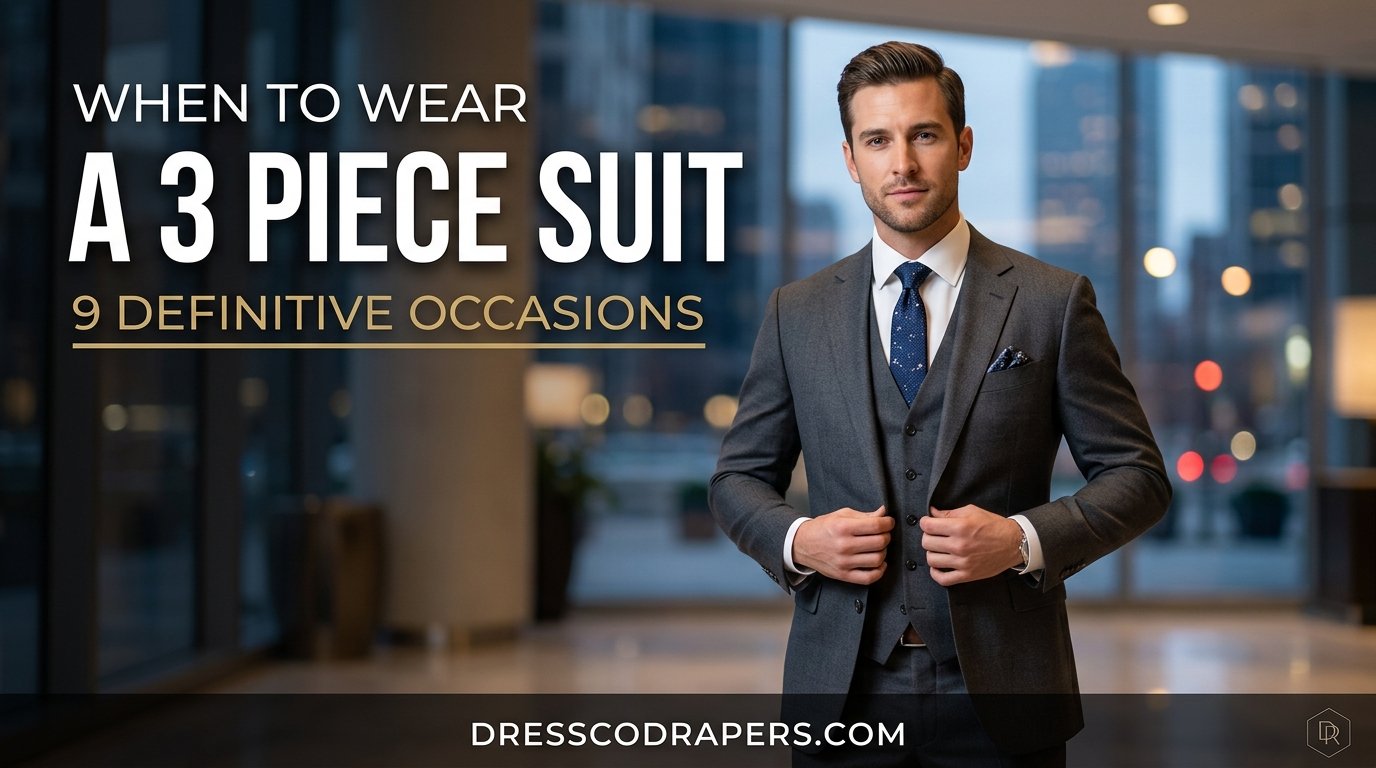
When to Wear a 3 Piece Suit: 9 Definitive Occasions for Maximum Impact
Understanding when to wear a 3 piece suit is the difference between looking appropriately polished and commanding an entire room the moment you walk through the door.
Most men own suits. Far fewer understand the strategic deployment of a three-piece ensemble—where the addition of a waistcoat elevates formality, sharpens your silhouette, and communicates a level of intentionality that two-piece suits simply cannot match.
At Dressco Drapers, we have spent years consulting with professionals, groomsmen, and executives on precisely this question. Our expertise in luxury menswear and bespoke tailoring has given us a front-row perspective on how occasion, context, and timing transform a well-made suit from a wardrobe item into a strategic advantage.
This is not a generic list of events. This is a comprehensive, expert-led guide that covers the psychology, the technical details, the fabric science, and the 2026 context behind knowing exactly when—and how—to deploy your most powerful outfit.
Before discussing specific occasions, it is essential to understand why the 3 piece suit carries the psychological weight it does.
The Authority Signal
Research in social psychology consistently demonstrates that formal attire increases perceived competence, trustworthiness, and authority. The three-piece suit amplifies this effect through a mechanism called layered intentionality.
A two-piece suit suggests you got dressed. A three-piece suit suggests you assembled an outfit—that every layer was a deliberate choice. This distinction registers immediately in the minds of everyone you encounter, often unconsciously.
The Silhouette Advantage
The waistcoat creates a continuous visual line from shoulder to waist, producing a clean V-shape that elongates the torso and defines the midsection. This is universally flattering.
Princeton University research suggests people form lasting judgments within 100 milliseconds of an encounter. A 3 piece suit stacks those milliseconds decisively in your favor through structured proportions and layered visual depth.
The Rarity Factor
In any given professional or social setting, the vast majority of suited men wear two pieces. The man in a three-piece occupies a visually distinct category. Rarity drives attention. Attention, deployed correctly, drives influence.
9 Definitive Occasions When to Wear a 3 Piece Suit
1. Executive Presentations and High-Stakes Business Meetings
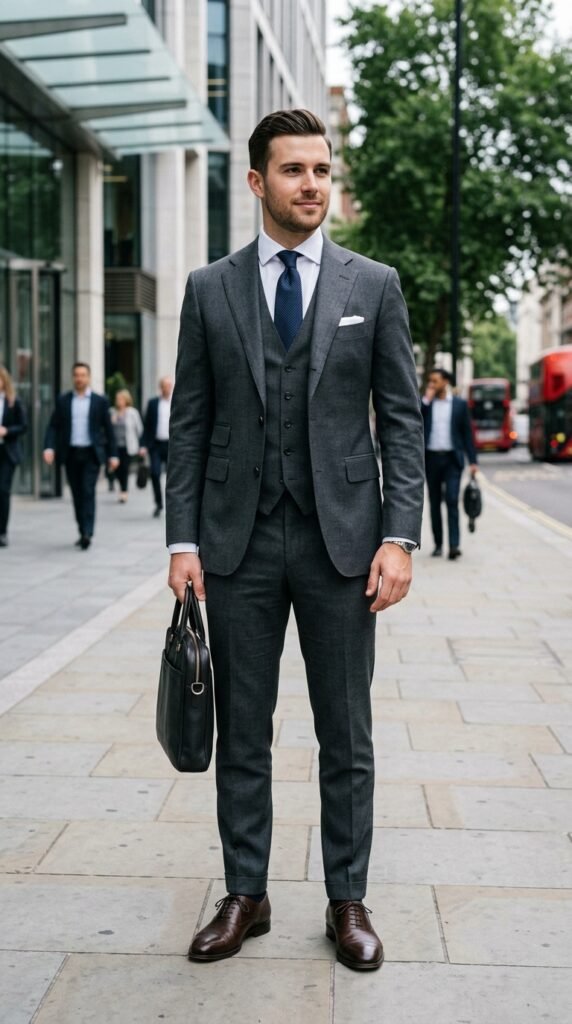
This is the 3 piece suit’s natural habitat. When the outcome of a meeting directly affects your career trajectory, revenue, or professional reputation, the three-piece communicates preparation, authority, and serious intent.
The waistcoat signals meticulousness—you did not rush to get dressed. You invested thought into your appearance, which implies you invest thought into your work.
Technical recommendation: Choose a 3 piece suit in navy or charcoal worsted wool (260–300 GSM) with a white poplin dress shirt and a solid silk tie in burgundy or navy. This combination is the executive standard across industries.
2. Weddings: As Groom, Groomsman, or Guest
Weddings are among the most photographed events in your life. Every image will persist for decades. A 3 piece suit ensures you look sharp in every frame.
As the groom: The full three-piece is the definitive choice. It distinguishes you from groomsmen (who may wear two-piece) and anchors the entire visual story of the day.
As a groomsman: Coordinate with the wedding party’s palette while letting the waistcoat add cohesion and formality.
As a guest: A three-piece shows respect for the occasion without competing with the wedding party. Choose muted tones—medium grey, slate blue, or navy.
Seasonal fabric guidance: For spring and summer weddings, select tropical wool or linen-wool blends in 180–220 GSM. For autumn and winter ceremonies, worsted wool or flannel in 280–340 GSM provides warmth and richer texture.
3. Job Interviews for Senior-Level Positions
First impressions in interviews are formed before you finish your opening sentence. A 3 piece suit communicates ambition, attention to detail, and professional maturity.
This does not apply to every interview. For creative startups or casual-culture companies, a three-piece may overcorrect. But for management roles, client-facing positions, finance, law, consulting, and corporate leadership, the three-piece is a decisive advantage.
Fit note: Ensure your suit fits impeccably for interviews. Shoulder seams must terminate at the shoulder bone. The waistcoat must lie flat without button pull. Trouser break should be minimal. Interviewers notice fit, even if they cannot articulate why.
4. Black-Tie Optional and Cocktail-Attire Events
“Black-tie optional” is one of the most confusing dress codes in modern social life. A 3 piece suit resolves the ambiguity perfectly.
It sits precisely between a standard suit and a tuxedo—formal enough to respect the occasion, flexible enough to avoid looking overdressed. In darker tones (charcoal, midnight navy, or black), a three-piece with a silk tie or bow tie navigates this dress code flawlessly.
Expert insight from Dressco Drapers: We consistently recommend three-piece suits over tuxedos for black-tie optional events. The tuxedo risks overcorrecting. The three-piece strikes the ideal middle ground with more personality and versatility.
5. Award Ceremonies and Industry Galas
Industry recognition events—whether you are receiving an award or attending to network—demand attire that communicates accomplishment and stature.
The 3 piece suit is inherently ceremonial without being costume-like. It carries the gravitas of the occasion while allowing your personality to emerge through fabric choice, color, and accessories.
Styling tip: For evening galas, consider a peak-lapel jacket with a 5-button single-breasted waistcoat in the same fabric. Add a silk pocket square and polished black Oxfords. This combination photographs exceptionally well under event lighting.
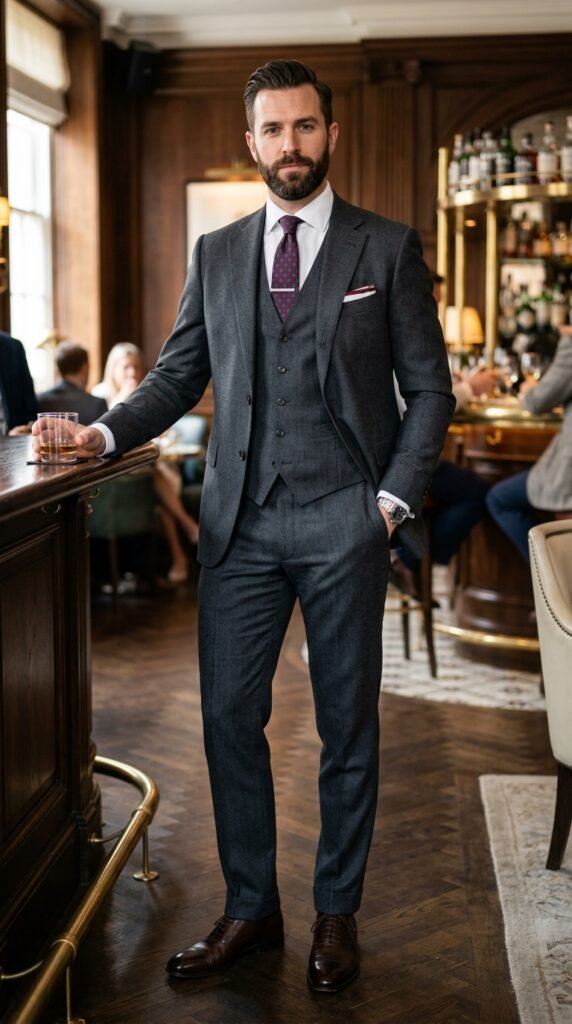
6. Important Client Dinners and Business Entertaining
When you are hosting or attending a dinner where business relationships are being built, maintained, or negotiated, your attire communicates your standards and the respect you extend to your guests.
A 3 piece suit at a client dinner says: I take this relationship seriously enough to prepare thoughtfully.
Context calibration: For fine-dining settings, wear the full three-piece with a tie. For upscale-casual restaurants, remove the tie and leave the top shirt button open. The waistcoat maintains structure and formality even without the tie.
7. Cultural Events: Theater, Opera, Gallery Openings
Cultural events occupy a unique formality space—they are not strictly corporate, but they carry an expectation of elevated presentation.
A 3 piece suit is the ideal response. It shows respect for the cultural context without the rigidity of black-tie. For gallery openings and theater performances, consider slightly more expressive choices—a textured fabric, a muted earth tone, or a contrast waistcoat.
2026 trend alignment: The art and culture circuit in 2026 increasingly favors tonal dressing—wearing a three-piece where the suit, shirt, and accessories operate within a single color family (e.g., navy suit, pale blue shirt, steel blue knit tie). This approach is modern, sophisticated, and perfectly calibrated for cultural settings.
8. Milestone Personal Celebrations
Significant birthdays, anniversary dinners, engagement celebrations, and retirement events are moments that deserve sartorial elevation.
A 3 piece suit transforms a dinner reservation into an occasion. It signals to everyone at the table—and to yourself—that this moment matters.
Personalization opportunity: Milestone events are the perfect context for expressing personality through your three-piece. Consider a waistcoat in a complementary pattern, a bolder tie color, or a pocket square that carries personal significance.
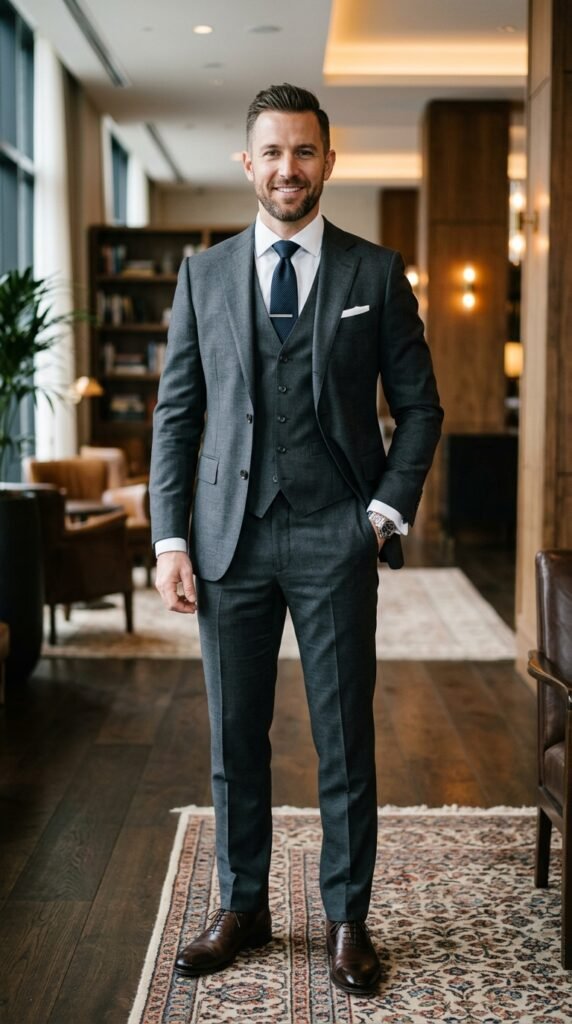
9. Networking Events and Professional Conferences
In networking environments, you have seconds to make an impression on dozens of people. Your appearance is your first communication—it precedes your handshake, your business card, and your elevator pitch.
A 3 piece suit at a conference or networking event creates instant visual distinction. When everyone else wears two-piece suits or blazer-and-chinos combinations, the three-piece marks you as someone who operates at a different standard.
Practical advantage: The waistcoat allows you to remove your jacket during long conference days without losing formality. You remain polished and presentable in waistcoat and shirt while others look disheveled in rumpled dress shirts.
When NOT to Wear a 3 Piece Suit: Reading the Room
Knowing when to wear a 3 piece suit also means knowing when to leave it in the closet. Context awareness is a hallmark of true style intelligence.
Avoid the three-piece in these scenarios:
Ultra-casual workplaces where the dress code is jeans and sneakers. You will appear disconnected from the culture, not elevated above it.
Outdoor summer events with temperatures above 35°C (95°F) unless the fabric is specifically chosen for heat (sub-200 GSM linen or tropical wool).
Sporting events and casual social gatherings where the formality gap between you and everyone else creates awkwardness rather than authority.
Funerals in cultures where a dark two-piece is the expected norm. A three-piece can appear performative in grief-oriented contexts—though this varies by culture and community.
The guiding principle: A 3 piece suit should elevate you within the context, not separate you from it.
How to Adapt Your 3 Piece Suit Across Formality Levels
One of the most powerful features of a three-piece suit is its modularity. A single ensemble adapts to at least four formality tiers through strategic assembly and disassembly.
Trousers with a navy blazer and open-collar shirt.
Waistcoat over a T-shirt with chinos (for the most adventurous).
Best for: Weekend outings, casual cultural events, travel days.
This four-tier system means a single 3 piece suit delivers the wardrobe utility of four separate outfits—maximizing your cost-per-wear investment.
Styling a 3 Piece Suit for Maximum Impact: Technical Breakdown
Shirt Selection by Occasion
The shirt beneath your three-piece suit must match the occasion’s formality and complement the suit’s proportions.
Occasion
Shirt Fabric
Color
Collar Style
Formal events
Poplin or twill, 100–120 two-ply cotton
White
Spread or cutaway
Business meetings
End-on-end or fine twill
White or light blue
Semi-spread
Creative/networking
Oxford cloth or chambray
Pale pink, lavender, subtle pattern
Button-down (casual only) or spread
Evening events
Marcella or fine poplin
White
Wing tip (with bow tie) or cutaway
Fit imperative: The shirt must be slim enough to sit cleanly under the waistcoat without bunching at the sides. Excess shirt fabric beneath a fitted vest creates visible lumps and destroys the layered silhouette.
Shoe Pairings by Context
Formal ceremonies: Black cap-toe Oxfords in polished calfskin. No exceptions for the highest-formality tier.
Business and professional: Dark brown Derbies or whole-cut Oxfords. Brown leather signals confidence and modernity against navy and grey suits.
Smart-casual: Double monk straps in medium brown or tan suede. A modern choice that works beautifully when the jacket is removed.
Evening events: Patent leather Oxfords if approaching black-tie territory. Otherwise, highly polished black calfskin.
Non-negotiable rule: Belt color, leather type, and finish must match your shoes. In a three-piece suit—where the waistcoat draws attention to the waist and belt line—a mismatch is glaringly visible.
Accessories That Amplify Impact
Accessories are the fine-tuning mechanism for your three-piece suit.
Ties: Silk grenadine or textured knit ties in solid tones—burgundy, forest green, navy, steel blue. Tie width should match lapel width: 7–8.5 cm for most modern suits.
Pocket squares: A white linen pocket square in a clean TV fold is universally correct. For personality, choose a complementary (never matching) color to your tie.
Cufflinks: Understated silver or gunmetal in geometric shapes. Avoid novelty designs in professional contexts.
Watch: A slim dress watch (under 10mm case thickness) that slides beneath the cuff without creating bulk. The three-piece silhouette is clean—a bulky sport watch disrupts it.
Tie bar (optional): Position between the third and fourth shirt buttons. Width should be narrower than the tie—never equal or wider.
Fabric Selection by Occasion and Season
Knowing when to wear a 3 piece suit is only half the equation. Knowing which fabric to wear for that occasion completes it.
Occasion Type
Season
Ideal Fabric
Weight (GSM)
Why It Works
Executive meetings
Year-round
Super 120s worsted wool
260–280
Clean drape, wrinkle-resistant, professional finish
Summer wedding
Spring/Summer
Linen-wool blend
180–220
Breathable, natural texture, relaxed elegance
Winter gala
Autumn/Winter
Wool flannel
300–360
Rich hand feel, warm, formal weight
Networking event
Spring/Autumn
Tropical wool or fresco
220–250
Lightweight, open weave, comfortable for long wear
Wool fiber fineness directly affects how your suit looks and performs at different events.
Super 100s–110s: Durable, resilient. Best for high-frequency wear—weekly business use, conferences, networking.
Super 120s–130s: The sweet spot. Refined drape with solid durability. Ideal for important meetings, interviews, and ceremonies you attend several times a year.
Super 140s–150s: Noticeably luxurious hand feel. Best reserved for special occasions—weddings, galas, milestone events—where the suit will not endure heavy wear.
Super 160s+: Exquisite softness, but fragile under stress. Appropriate only for the rarest, most significant occasions.
Dressco Drapers recommendation: For a versatile 3 piece suit that performs across multiple occasion types, Super 110s–130s worsted wool in 250–280 GSM delivers the optimal balance of comfort, durability, and refined appearance.
2026 Trends That Are Expanding When to Wear a 3 Piece Suit
The 2026 fashion season is actively redefining the contexts where three-piece suits feel appropriate—broadening their reach beyond traditional formal settings.
The “Refined Relaxation” Movement
Designers are softening the three-piece silhouette with natural shoulders (minimal padding), slightly relaxed chest construction, and softer fabrics like wool-cotton blends and deconstructed linings. This evolution makes the 3 piece suit wearable in contexts that would have felt too formal even five years ago.
Smart-casual environments, creative workplaces, and daytime social events are now legitimate three-piece territory—provided the construction and fabric support the relaxed intent.
Expanded Color Palettes
The 2026 palette moves beyond navy-charcoal dominance. Dusty sage, warm taupe, muted terracotta, slate blue, and soft olive are emerging across luxury collections. These earth-adjacent tones make the three-piece feel less corporate and more personal—opening it to cultural events, daytime celebrations, and weekend occasions.
Textured Weaves for Visual Depth
Plain worsted wools are yielding to micro-herringbone, birdseye, hopsack, and cavalry twill weaves. These textures add visual richness without pattern, allowing the suit to feel appropriate in less formal contexts where a flat, corporate-looking fabric would feel stiff.
Contrast Waistcoats
One of 2026’s boldest developments: wearing a patterned or differently textured waistcoat with a solid suit. A checked wool vest under a plain navy jacket, or a tweed waistcoat with a smooth worsted suit—these combinations inject personality and expand the suit’s range into creative and cultural settings.
Performance-Enhanced Fabrics
Natural stretch wools (2–3% elastane), wrinkle-recovery treatments, and moisture-wicking merino blends are making the three-piece viable for full-day conference wear, travel, and back-to-back meeting schedules without sacrificing appearance over 12–14 hours.
Care and Maintenance Between High-Impact Events
Your 3 piece suit’s impact depends on its condition. A wrinkled, neglected three-piece communicates the opposite of what you intend. Meticulous care between wears is non-negotiable.
Immediate Post-Wear Protocol
Hang all three pieces on wide, contoured wooden hangers immediately after removal. Wire and plastic hangers distort shoulder lines—especially in structured jackets.
Brush the jacket, waistcoat, and trousers with a natural bristle garment brush, stroking in the direction of the fabric’s nap. This removes surface debris and prevents premature fiber wear.
Empty all pockets. Weighted pockets distort drape and create permanent stretching in trouser and jacket fabric.
Allow 48 hours minimum between wears. Rotating suits lets wool fibers naturally recover their shape and release absorbed moisture.
Cleaning Strategy
Dry clean sparingly—maximum 2–3 times per year. Over-cleaning strips natural lanolin from wool, accelerating fabric aging and reducing drape quality.
Spot clean immediately when stains occur. Blot gently with a damp cloth and mild detergent—never rub.
Steam between dry cleanings to refresh fabric and release light wrinkles. A handheld garment steamer is an essential investment for any man who wears suits regularly.
Never iron directly on suit fabric without a pressing cloth. Direct heat creates permanent shine marks, particularly on darker wools.
Long-Term Storage
Store in a breathable cotton garment bag. Avoid plastic covers, which trap humidity and promote mildew.
Place cedar blocks in the closet for natural moth deterrence. Avoid chemical mothballs, which leave persistent odor.
Keep suits in a cool, dry location away from direct sunlight. UV exposure fades fabric—especially navy and charcoal tones—unevenly over time.
Common Timing and Styling Mistakes to Avoid
Even well-intentioned men undermine their three-piece suit’s impact through these avoidable errors.
Wearing a 3 piece suit to an event that calls for a tuxedo. Black-tie means black-tie. A three-piece at a formal gala where tuxedos are expected reads as underdressed, not creative.
Overdressing the room by two formality levels. A three-piece at a casual barbecue creates distance, not distinction. Elevate within the context, not above it.
Leaving the jacket unbuttoned while standing. Button the jacket when you stand. Unbutton when you sit. This is fundamental suit etiquette, and the three-piece amplifies any violations because the waistcoat draws attention to the torso.
Visible shirt between waistcoat and trousers. The vest must cover the trouser waistband completely at all times—standing, sitting, and reaching. This is the most common three-piece fit failure.
Buttoning the bottom waistcoat button. The last button always remains undone. Always.
Matching pocket square exactly to the tie. Complement—never match. Identical fabrics and colors between tie and pocket square look costume-like rather than curated.
Neglecting shoe-belt coordination. In a three-piece, the waistcoat draws the eye to the midsection, making the belt a focal point. Belt and shoes must match in color, finish, and leather type without exception.
Wearing a heavy winter-weight three-piece to a summer event. Fabric weight must align with the season. 300+ GSM flannel in July looks as wrong as 180 GSM linen in December.
FAQs About When to Wear a 3 Piece Suit
Can I wear a 3 piece suit to a casual office environment?
It depends entirely on workplace culture. In traditional corporate environments, a three-piece is appropriate and often respected. In casual or creative workplaces, it may create an uncomfortable formality gap. The middle ground: wear the waistcoat and trousers without the jacket—this maintains polish without the full formality of a complete three-piece.
Is a 3 piece suit too formal for a daytime event?
Not at all—provided you calibrate the fabric and color correctly. For daytime occasions like garden parties, daytime weddings, or brunch celebrations, choose lighter fabrics (linen-wool, tropical wool in 180–220 GSM) and lighter colors (light grey, stone, pale blue). The lighter palette signals daytime appropriateness while the three-piece structure maintains elevated presentation.
What is the difference between a 3 piece suit and a waistcoat suit?
They are identical. “Waistcoat” is the traditional British term for the vest. Both refer to a suit comprising a jacket, trousers, and a matching vest cut from the same cloth. The terms are interchangeable across markets.
Should I wear all three pieces throughout an entire event?
No—and this is one of the three-piece suit’s greatest advantages. Wear the full ensemble for arrivals, key moments, and photographs. Remove the jacket during long receptions, conference sessions, or dinner service. The waistcoat keeps you looking polished and intentional even without the outer layer—something a two-piece suit cannot accomplish.
Can a shorter man wear a 3 piece suit effectively?
Absolutely. The vertical lines of a fitted waistcoat elongate the torso visually. To maximize this effect, choose a V-shaped waistcoat opening that creates a long, unbroken line from chest to waist. Pair with medium-rise trousers, minimal trouser break, and ensure the jacket length is proportionate—ending at mid-hip, not below.
How do I know if my 3 piece suit fits correctly for maximum impact?
Check these five points:
Jacket shoulders terminate precisely at the shoulder bone—no overhang, no pinching.
Waistcoat lies flat against the torso with zero button pull or horizontal strain lines.
No shirt visible between the waistcoat bottom edge and the trouser waistband.
Trouser front hangs cleanly without bunching at the thigh or pooling at the ankle.
Shirt cuffs show approximately 1–1.5 cm beyond the jacket sleeve.
If any of these five points fail, invest in tailoring adjustments before wearing the suit to any high-impact event.
Final Word: Timing Is the Ultimate Style Skill
Owning a beautifully constructed suit matters. Knowing when to wear a 3 piece suit matters more.
The right suit at the wrong event creates awkwardness. The right suit at the right moment creates authority, distinction, and lasting impressions that outlive the event itself.
From executive boardrooms to wedding ceremonies, from black-tie-optional galas to milestone celebrations, the 3 piece suit remains the most versatile, most impactful, and most strategically powerful ensemble in a man’s wardrobe. In 2026—with softened silhouettes, expanded color palettes, performance-enhanced fabrics, and broadened occasion relevance—it has never been more wearable or more essential.
Master the timing. Match the fabric to the season. Calibrate the formality to the context. And when the moment calls for maximum impact, reach for the three-piece.
Explore the complete Dressco Drapers 3 piece suit collection and discover what expert construction, premium fabrics, and impeccable fit feel like when every detail is designed for the moments that matter most.