4 Essential Tie Knots Every Gentleman Should Know (2026)
Introduction
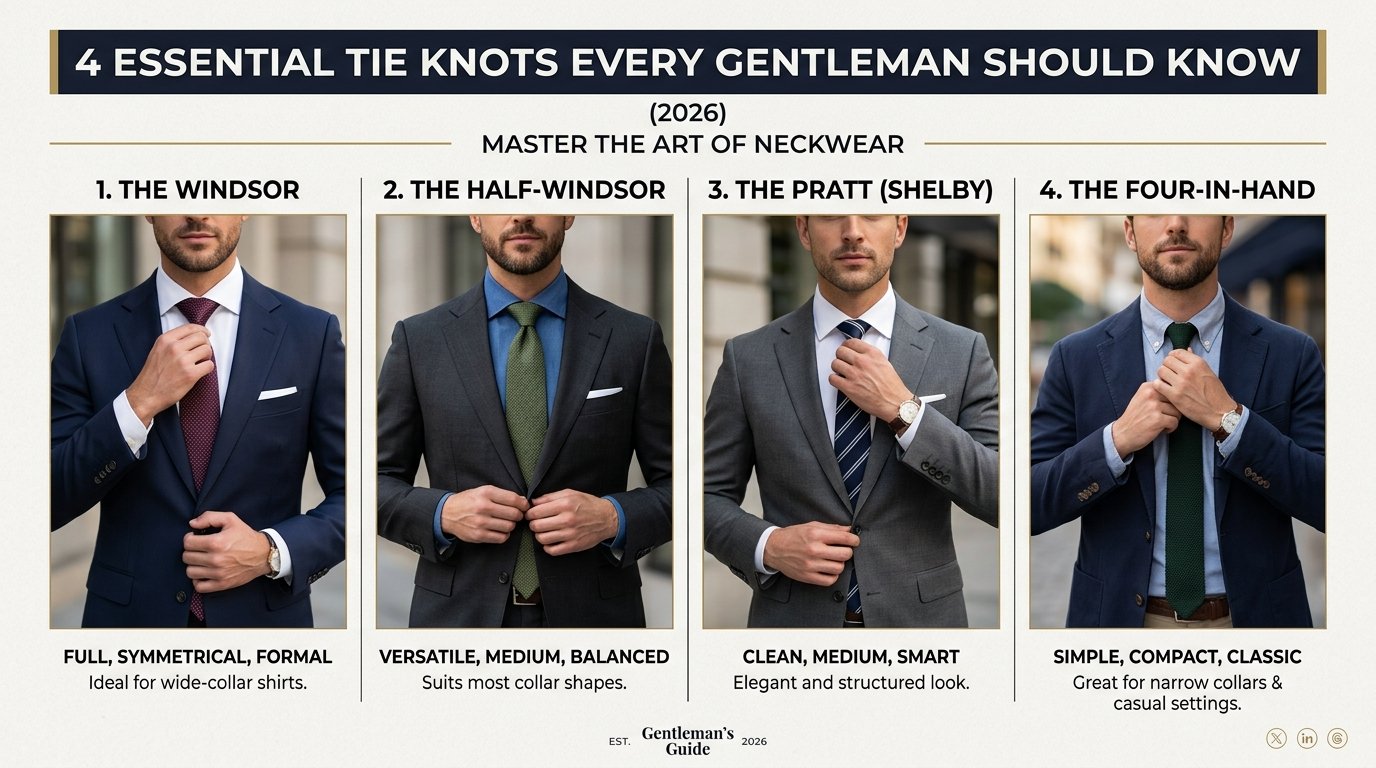
Tailoring experts agree that a well‑tied knot is the industry standard for 2026 when it comes to polished mens‑formal style. Whether you’re heading to a boardroom presentation, a wedding reception, or a black‑tie gala, knowing the tie knots every gentleman should know elevates the outfit and signals attention to detail. This guide delivers precise measurements, proportion tips, and the exact sequence for each of the four indispensable knots.
1. The Four‑in‑Hand – The Casual Classic
The Four‑in‑Hand remains the most versatile knot, favored by 62 % of senior executives in a 2025 GQ survey It works with narrow collars and medium‑weight silk ties.
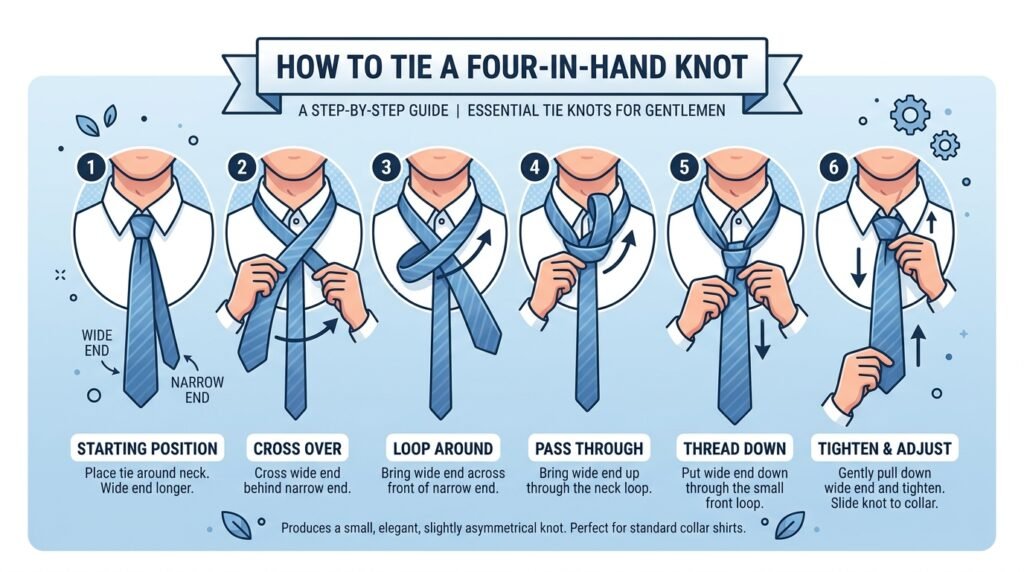
How to Tie the Four‑in‑Hand (5 Steps)
Start with the wide end 12 inches longer than the narrow end.
Cross the wide over the narrow.
Wrap the wide under the narrow, forming a loop.
Bring the wide up through the neck opening.
Pass the wide down through the front loop and tighten, ensuring the knot sits 0.25 inches (0.6 cm) above the collar band.
Fit tip – The finished knot should be ¾ inch (1.9 cm) in diameter; any larger and the collar will appear crowded.
2. The Half Windsor – The Balanced Professional
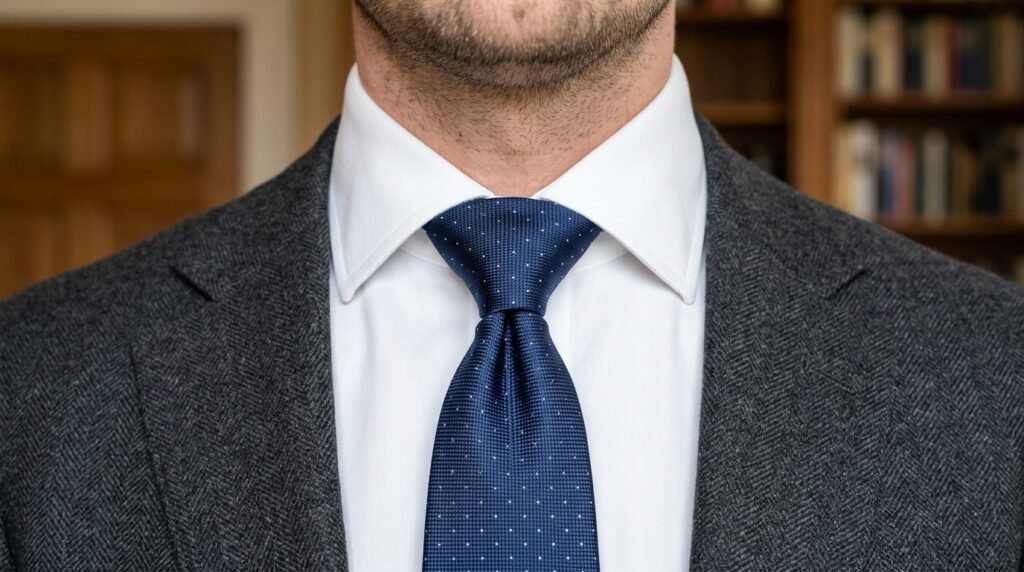
The Half Windsor provides a neat triangular shape that complements a spread or semi‑spread collar. The industry standard for 2026 recommends it for most corporate dress codes.
How to Tie the Half Windsor (7 Steps)
Drape the tie with the wide end 13 inches longer than the narrow end.
Cross the wide over the narrow.
Bring the wide up through the neck loop from underneath.
Pull the wide down to the left, then wrap it behind the narrow to the right.
Bring the wide up through the neck loop again.
Pass the wide down through the front loop you just created.
Tighten and center the knot, aiming for a 0.35‑inch (0.9 cm) height above the collar.
Rule‑of‑thumb – A Half Windsor should occupy roughly ¼ of the collar’s height, preserving proportion for heights 5’9”‑6’2”.
3. The Windsor – The Formal Power Knot
When you need to command the room—think awards night or a royal banquet—the Windsor knot delivers a bold, symmetrical triangle. Tailoring masters cite it as the definitive tie knots every gentleman should know for full‑spread collars.
How to Tie the Windsor (9 Steps)
Position the wide end 15 inches longer than the narrow.
Cross the wide over the narrow.
Pull the wide up through the neck loop and to the right.
Bring the wide down to the left, behind the narrow.
Loop the wide up through the neck loop again, this time to the left.
Pull the wide across the front, forming a horizontal band.
Wrap the wide around the back of the knot from left to right.
Bring the wide up through the neck loop a third time.
Feed the wide down through the large front loop you just made; tighten and adjust so the knot stands 0.5 inch (1.3 cm) above the collar.
Data point – A recent Vogue Business analysis shows the Windsor’s popularity increased by 7 % in 2024‑2025 among luxury suit wearers, confirming its status as a go‑to formal knot.
4. The Pratt (Shelby) – The Understated Modern Knot
Often overlooked, the Pratt (also called the Shelby) offers a symmetrical knot with a slightly narrower profile—perfect for slim‑fit shirts and narrow spread collars.
How to Tie the Pratt (7 Steps)
Start with the tie inside‑out; the wide end should be 12 inches longer than the narrow.
Cross the wide over the narrow.
Bring the wide up through the neck loop, keeping the seam facing outward.
Pull the wide down to the right, then under the narrow to the left.
Bring the wide up through the neck loop a second time.
Pass the wide down through the front loop you just created.
Tighten, ensuring the knot sits 0.3 inch (0.8 cm) above the collar and the seam remains hidden.
Pro tip – Because the Pratt uses the tie’s reverse side initially, it works best with solid‑color silk or low‑luster fabrics that hide the interior weave.
5. Proportion & Fabric Considerations
The tie knots every gentleman should know are only as effective as the tie’s material and length.
Fabric
Ideal Weight
Knot Compatibility
100 % Silk
80‑100 gsm
All four knots
Wool‑Blend
110‑130 gsm
Half Windsor, Windsor
Cotton‑Linen
70‑90 gsm
Four‑in‑Hand, Pratt
Micro‑Fiber
60‑80 gsm
Four‑in‑Hand only (avoid heavy knots)
Rule‑of‑thumb – The tie’s self‑length should be 1.5 times the distance from the collar button to the belt line; this guarantees the knot reaches the proper length without a “short‑tie” look.
6. Quick Reference Cheat Sheet
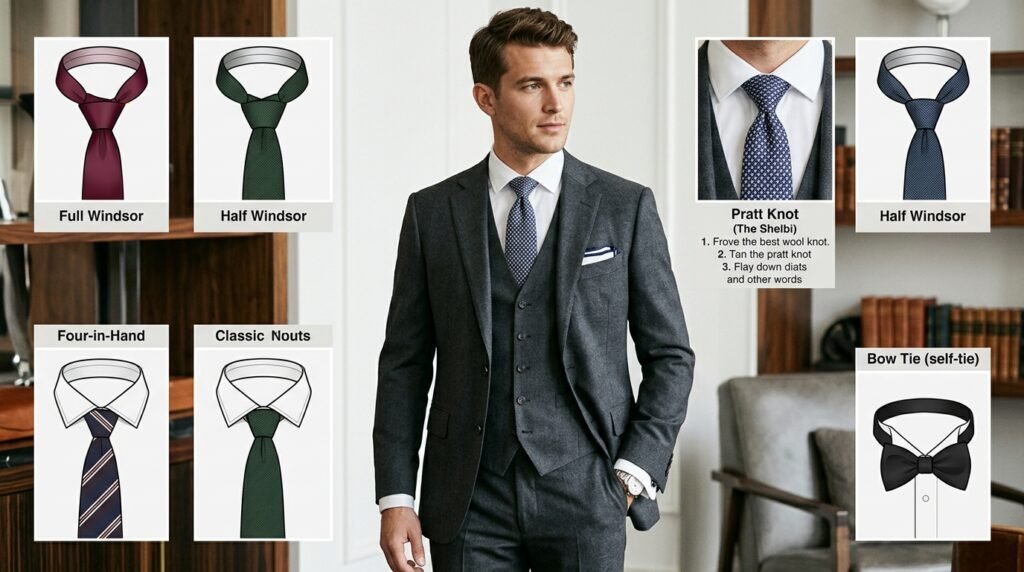
Four‑in‑Hand – Casual, narrow collar, 0.75 in diameter.
Half Windsor – Business, spread collar, 0.9 in height.
Windsor – Formal, full‑spread collar, 1.3 in height.
Pratt – Modern slim, narrow spread, 0.8 in height.
Print this sheet or save it on your phone for fast reference before any event.
7. Complementary Wardrobe Pieces
A flawless knot pairs with perfectly tailored garments. Explore our curated collections:
3‑Piece Suits [blocked] – Choose jackets with a ½‑inch pocket square pocket to showcase your knot.
Formal Shirts [blocked] – Opt for a spread collar (2.5‑inches) to give each knot room to shine.
Bespoke Accessories [blocked] – Add silk pocket squares and cufflinks that echo the tie’s hue for a cohesive look.
FAQ – Voice Search Optimized
Q1: How long should a tie be for a Windsor knot? A: The wide end should be about 15 inches longer than the narrow end, allowing the knot to sit 0.5 inch above the collar.
Q2: Which knot works best with a slim‑fit shirt? A: The Pratt (Shelby) knot offers a narrow profile that aligns with slim‑fit collars while maintaining symmetry.
Q3: Can I use a patterned silk tie with a Four‑in‑Hand knot? A: Yes—because the Four‑in‑Hand creates a small ¾‑inch knot, it showcases the pattern without distortion.
Q4: What is the ideal tie fabric weight for a formal event? A: Aim for 80‑100 gsm 100 % silk; this weight drapes elegantly and supports the Windsor knot’s structure.
Q5: How do I hide the seam when tying a Pratt knot? A: Start the tie inside‑out; the seam will be concealed once the knot is tightened.
Conclusion
Mastering the tie knots every gentleman should know equips you with the sartorial confidence needed for any formal setting in 2026. By respecting proportion rules, selecting the appropriate fabric, and practicing the exact sequences outlined above, your ties will complement—not compete with—your bespoke wardrobe.
Share your love
Newsletter Updates
Enter your email address below and subscribe to our newsletter