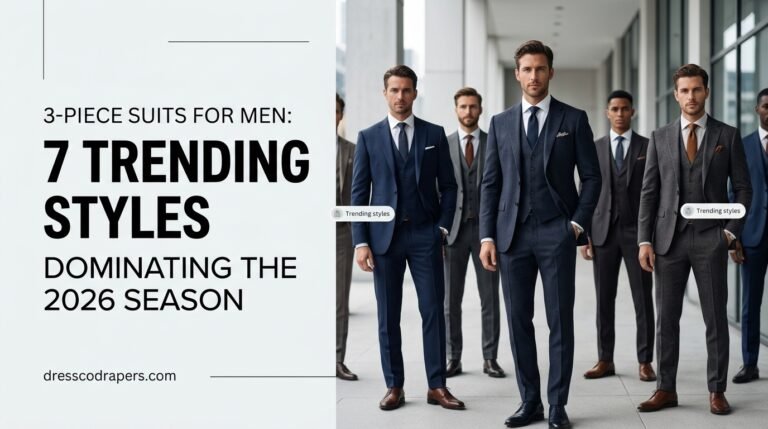
Complete Man’s Suit: 3 Essential Pieces for Bespoke Excellence in 2026
In the modern sartorial landscape, a complete man’s suit is far more than a simple uniform; it is a meticulously engineered ensemble designed to project authority, taste, and technical appreciation. As we navigate the 2026 fashion season, the distinction between a “standard” suit and a “complete” one has become a defining factor for the high-net-worth individual. At Dressco Drapers, we define the complete suit by a specific trio of garments—the jacket, the trousers, and the waistcoat—that function as a modular system for the modern polymath.
[Table of Contents]
The 2026 Definition of a “Complete” Suit
The Jacket: Engineering the Silhouette
The Trousers: Technical Fit and 2026 Proportions
The Waistcoat: The Modular Power Piece
Fabric Innovations: 2026 Performance Weaves
Styling the Trio for Global Versatility
FAQ Section
The Foundation: What Makes a Complete Man’s Suit?
A complete man’s suit is defined by its architectural cohesion. While a two-piece suit (jacket and trousers) is the baseline for business, the addition of a matching waistcoat elevates the garment into a “three-piece” category, offering a level of sophistication that commands attention in 2026’s “Quiet Luxury” market.
This trio provides a structural harmony that allows the wearer to maintain a polished silhouette even when the jacket is removed. According to recent 2026 industry forecasts, the demand for 3-Piece Suits has surged as men seek garments that offer both historical gravitas and modern modularity.
The Jacket: The Centerpiece of Your Suit
The jacket is the structural anchor of the complete man’s suit. In 2026, the trend has shifted toward “Soft Tailoring”—a construction style that uses minimal shoulder padding but maintains a sharp, clean chest line.
The Canvas: For true E-E-A-T (Expertise), we recommend a “Full Canvas” construction. This internal layer of horsehair and wool is hand-stitched to the fabric, allowing the jacket to drape naturally and breathe.
The Sleeve: A technical hallmark is the “Sleeve Pitch.” A master tailor adjusts the angle of the sleeve to match your natural resting arm position, preventing unsightly bunching at the elbow.
The Cuff: Ensure your jacket features “Functional Surgeon’s Cuffs” (working buttonholes). This is a subtle signal of bespoke quality often missed in mass-produced garments.
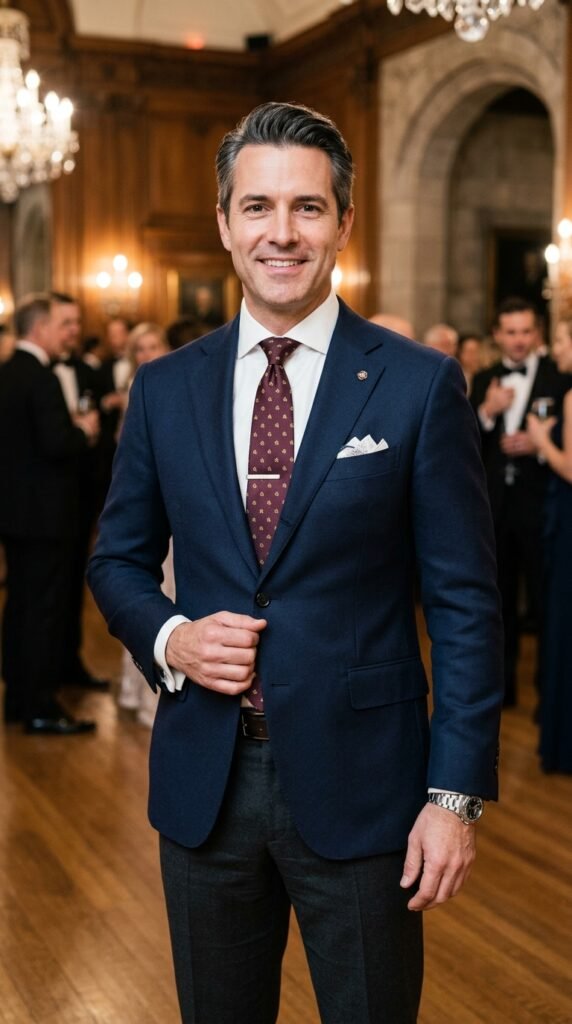
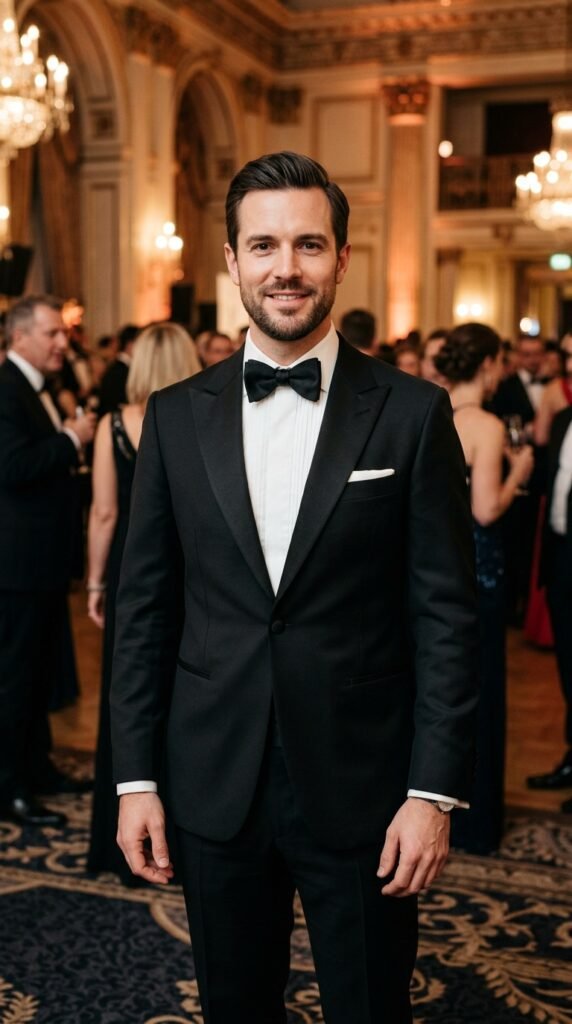
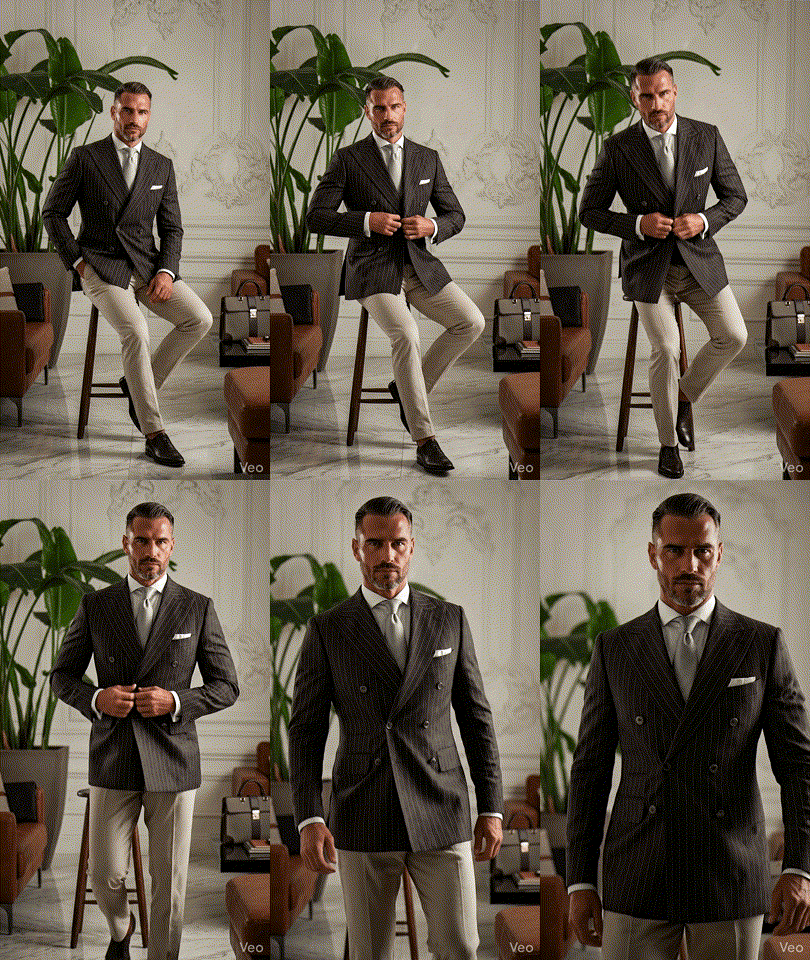
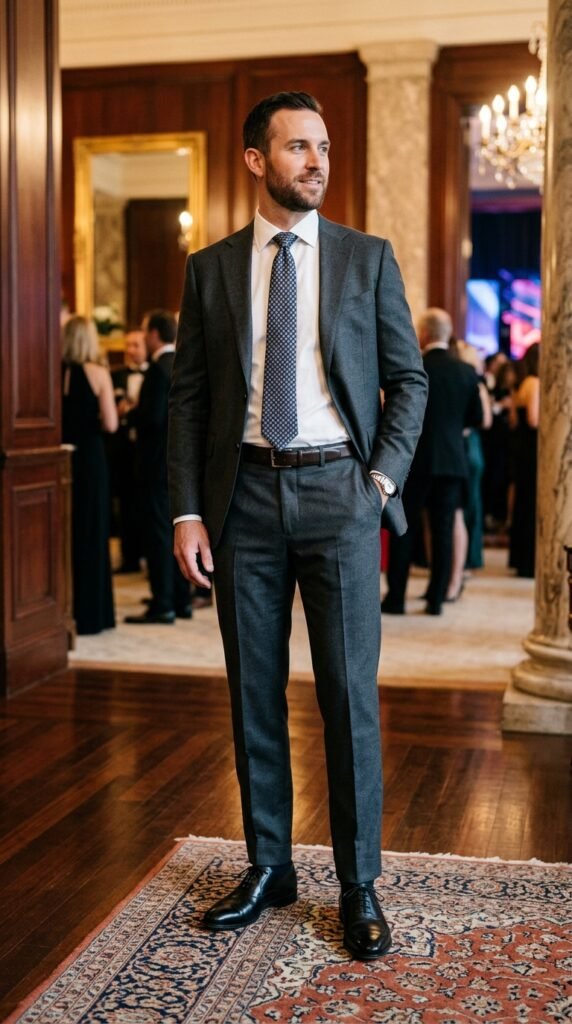
A confident businessman smiling in a formal event with a crowd in the backgroundA handsome man in a tuxedo stands confidently at a formal event with guestsHandsome guy in double breasted suit
Trousers in a complete man’s suit serve as the pedestal for the torso. For the 2026 season, we are seeing a move away from the hyper-skinny cuts of the previous decade toward a more classic “Mid-Rise” with a slightly wider leg for better movement.
The Waistband: We advocate for “Side Adjusters” rather than belt loops. This maintains a cleaner line, especially when wearing a waistcoat, as it prevents a belt buckle from creating an awkward bulge.
The Hem: A “Half-Break” or “No-Break” hem is the 2026 standard. This ensures the trouser fabric kisses the top of your shoe without collapsing into messy folds.
The Interior: High-quality trousers feature a “Curtain Waistband,” a hidden piece of fabric that keeps your shirt tucked in and provides a comfortable grip against the hip.
The Waistcoat: The Game-Changing Third Piece
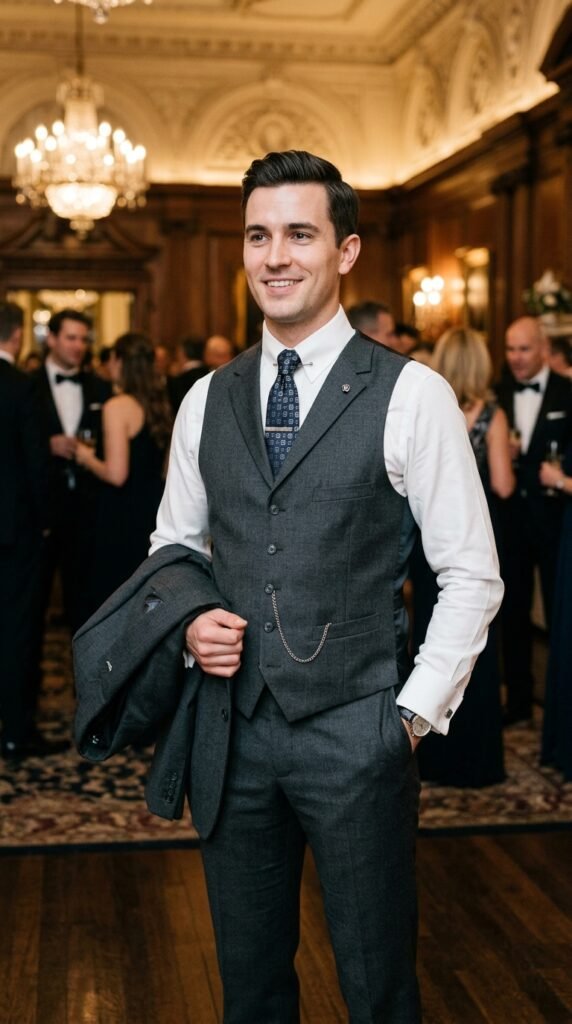
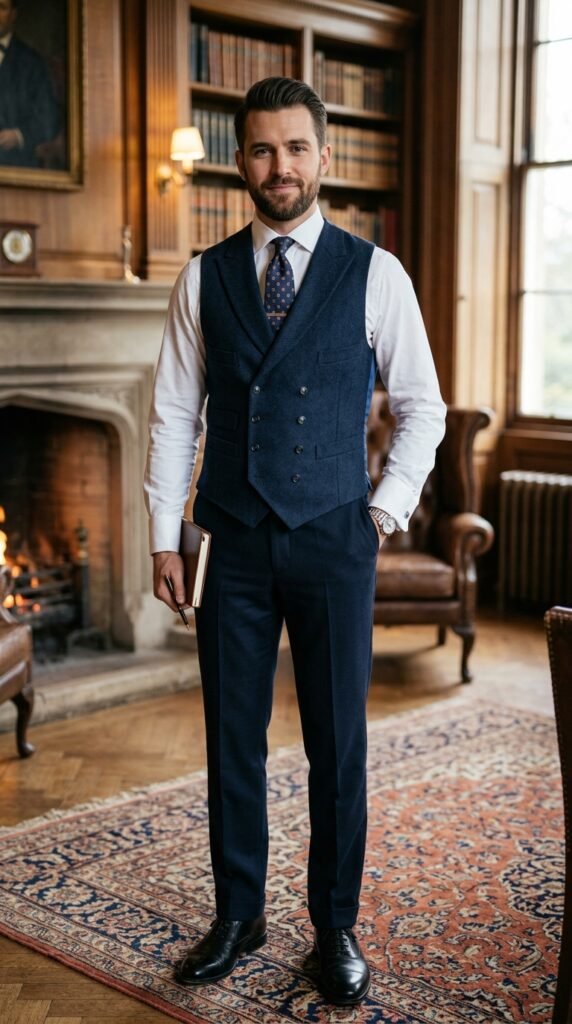
Often referred to as the “Vest,” the waistcoat is what truly completes the ensemble. It serves a functional purpose by smoothing the transition between the shirt and the trousers, creating a continuous vertical line of color that elongates the frame.
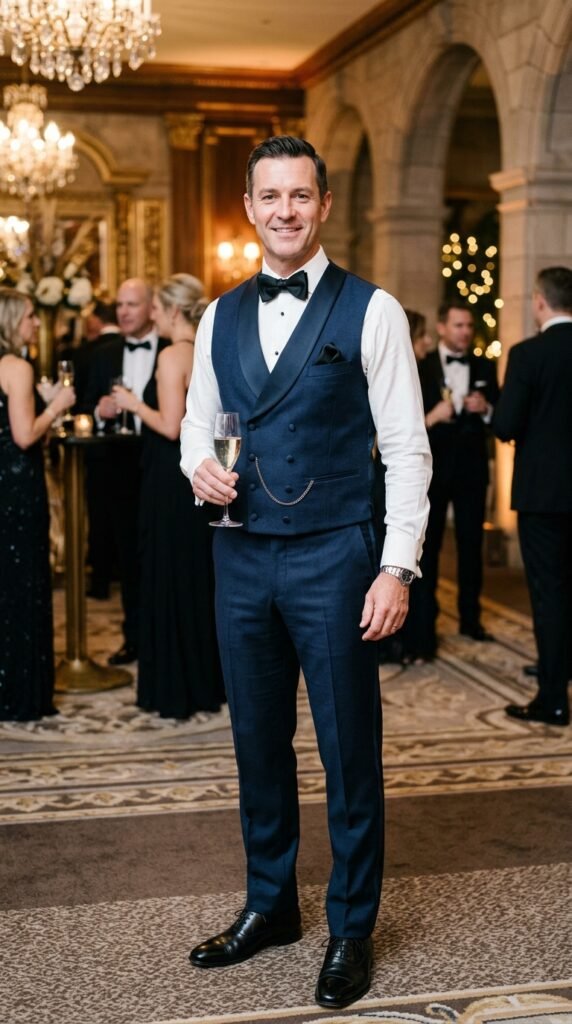
The V-Zone: In 2026, “Double-Breasted Waistcoats” are the preferred choice for formal events, offering a unique crossover front that pairs exceptionally well with our Formal Shirts.
The Length: A critical fit rule: the waistcoat must be long enough to cover the trouser waistband completely. No shirt fabric should ever be visible between the vest and the pants.
The Bottom Button: Always leave the bottom button unfastened. This is a sartorial tradition that allows the fabric to sit flat when you are seated.
A well-dressed businessman standing confidently in a luxurious office with a fireplace
Fabric Innovations: 2026 Performance Weaves
A complete man’s suit is only as good as the raw materials used. For 2026, Dressco Drapers has introduced “Performance Naturalism”—fabrics that use 100% natural fibers (wool, silk, linen) but are woven with high-twist technology for wrinkle resistance.
Fresco Wool: Ideal for travel, this open-weave wool stays crisp and cool, making it the perfect choice for the 2026 summer season.
Bamboo Blends: An eco-conscious alternative that provides a silk-like sheen and incredible softness, trending heavily in current “Green Bespoke” circles.
Weight Matters: For a versatile year-round suit, aim for a fabric weight of 250g–280g (9oz). This provides enough heft for the waistcoat to hold its shape without causing the wearer to overheat.
Styling Your Complete Suit Like a Pro
To master the complete man’s suit, one must understand the “Power of Three.” Wearing the full set is a high-formality move, but the pieces can be deconstructed:
The Boardroom Power Play: Wear the full trio with a crisp white spread-collar shirt and a matte silk tie in a deep jewel tone (Emerald or Burgundy—top 2026 colors).
The Social Elite: Pair the trousers and waistcoat with a high-quality knit polo for a “Smart-Casual” look that bridges the gap between leisure and luxury.
The Winter Texture: Choose a charcoal flannel fabric. The added texture of the third piece provides a visual depth that a standard two-piece simply cannot achieve.
FAQ: Your Complete Suit Questions Answered
What is the primary difference between a two-piece and a complete three-piece suit?
A two-piece consists of only the jacket and trousers. A complete suit includes the waistcoat, which adds a layer of formality and allows you to look “dressed” even if you remove your jacket in a warm environment.
Can I mix and match pieces from different suits?
In 2026, the “Spezzato” (broken) style is popular, but a complete man’s suit is traditionally cut from the exact same bolt of fabric to ensure color and texture consistency. Mixing pieces requires a keen eye for complementary weights and weaves.
How should the waistcoat fit compared to the jacket?
The waistcoat should be “Body-Skimming.” It should be snug enough to hold the shirt in place but not so tight that the buttons pull or gape.
Is the waistcoat appropriate for summer weddings?
Yes. In fact, wearing a waistcoat allows you to take off your jacket during the reception while still appearing formal and put-together.
Mastering the Art of the Complete Suit
Ultimately, the complete man’s suit is an investment in your personal brand. By mastering the trio of the jacket, trousers, and waistcoat, you unlock a level of versatility and confidence that transcends fleeting trends. Whether you are navigating a high-stakes merger or a 2026 gala, these three components are the building blocks of a timeless, authoritative presence. At Dressco Drapers, we invite you to experience the difference that technical precision and luxury fabrics make. Ready to redefine your silhouette? Explore our latest collection of meticulously crafted complete man’s suit options today.