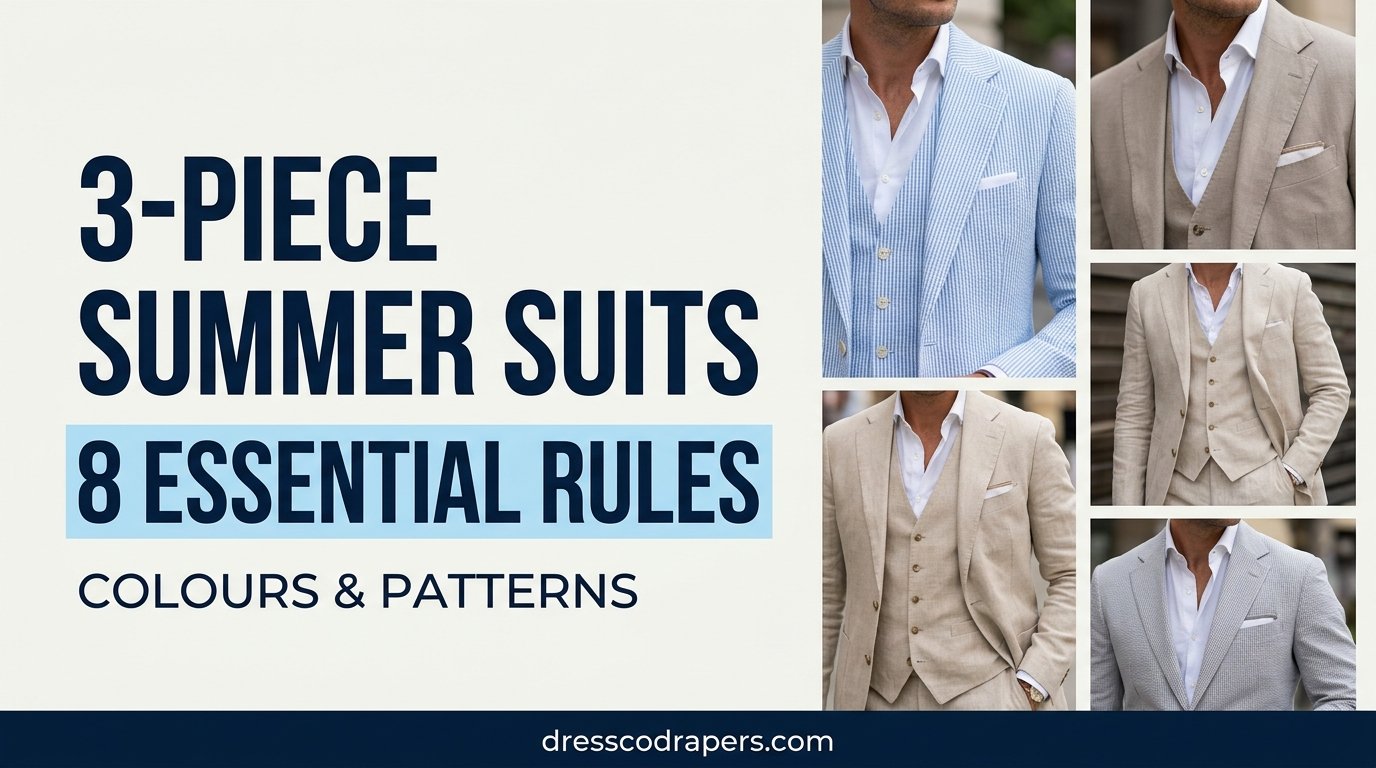
3-Piece Summer Suit Colours and Patterns: 8 Essential Rules for a Flawless Warm-Weather Look
Choosing the right colours and patterns for a 3-piece summer suit is one of the most consequential style decisions a man makes each year. Get it right, and you project effortless sophistication through every heatwave, garden party, and outdoor ceremony. Get it wrong, and you look either overdressed or, worse, like you borrowed someone else’s winter suit and hoped nobody would notice.
The challenge is real. Most menswear advice treats summer suiting as an afterthought — simply suggesting “lighter colours” without explaining which lighter colours, which patterns, and why they work specifically in a three-piece configuration where a waistcoat introduces a third layer of visual complexity.
This guide provides the definitive framework. Every recommendation is grounded in fabric science, colour theory, and the practical realities of dressing well in temperatures above 25°C.
Why Colour and Pattern Matter More in a 3-Piece Summer Suit
A 3-piece suit introduces a waistcoat — a third visible layer that occupies the most prominent real estate on your torso. In winter, this layer is typically concealed beneath a buttoned jacket. In summer, jackets come off. The waistcoat is exposed.
The industry standard for 2026 summer tailoring prioritises tonal cohesion across all three pieces while maintaining enough visual interest to avoid looking flat. The waistcoat becomes the centrepiece, which means your colour and pattern choices must work in three states simultaneously:
Full 3-piece — jacket on, waistcoat visible at the V-opening
Waistcoat forward — jacket removed, waistcoat as the primary torso garment
Jacket only — waistcoat removed entirely for peak-heat moments
A colour or pattern that works in one configuration but fails in another is a poor investment. The recommendations below pass all three tests.
The 5 Best Colours for a 3-Piece Summer Suit in 2026
1. Light Grey — The Undisputed Summer Essential
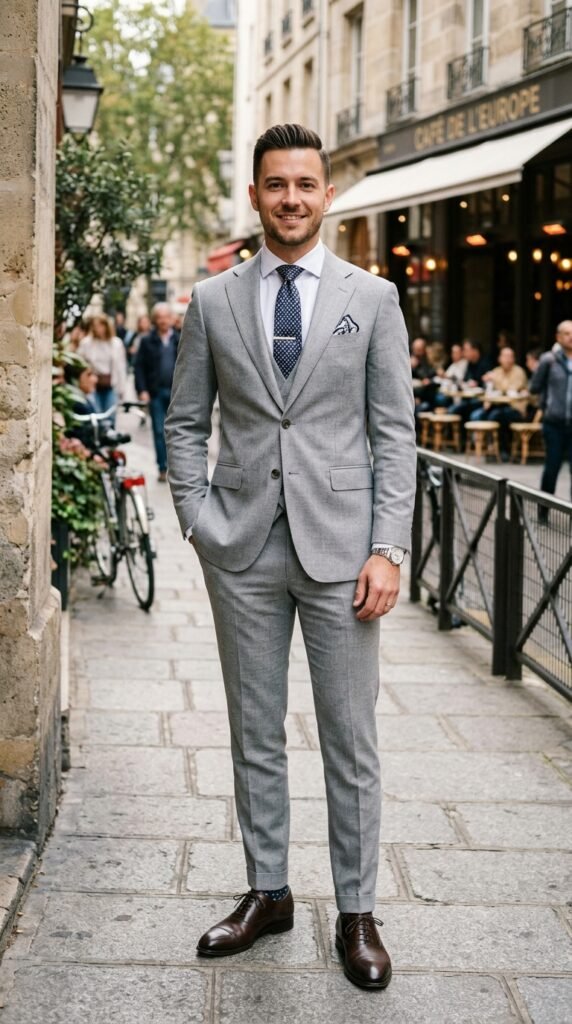
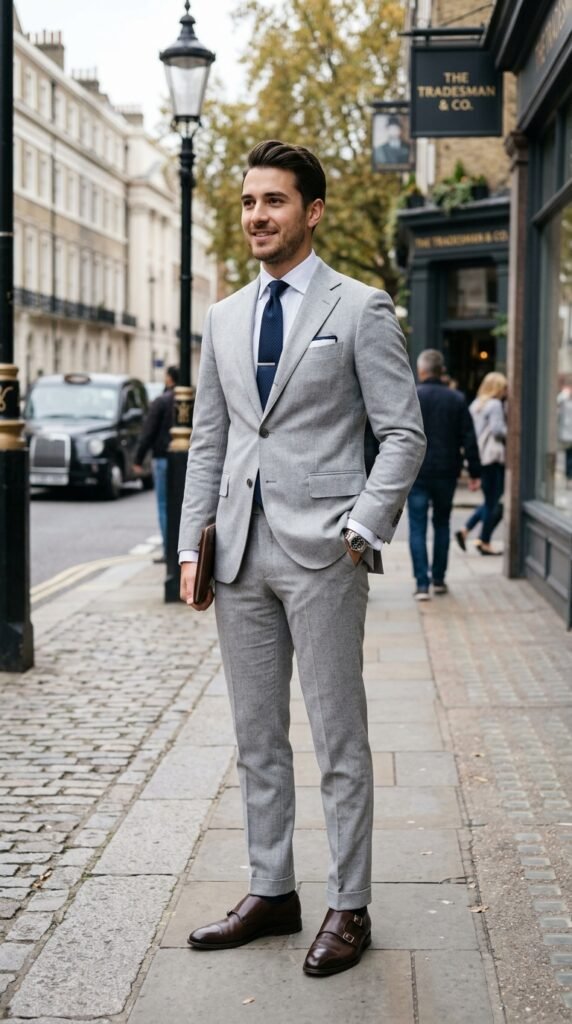
Tailoring experts agree that light grey is the single most versatile colour for warm-weather three-piece suiting. It reflects heat rather than absorbing it, pairs with virtually every shirt and accessory combination, and photographs beautifully in natural daylight.
Why it works for a 3-piece summer suit:
The waistcoat in light grey reads as intentionally elegant, not heavy
It creates a clean canvas for textured fabrics like fresco or hopsack
It transitions seamlessly from daytime events to evening occasions
Specific shade recommendation: Aim for a mid-to-light grey — approximately Pantone Cool Gray 4C. Avoid anything too pale (risks looking washed out) or too dark (absorbs heat and reads as autumnal).
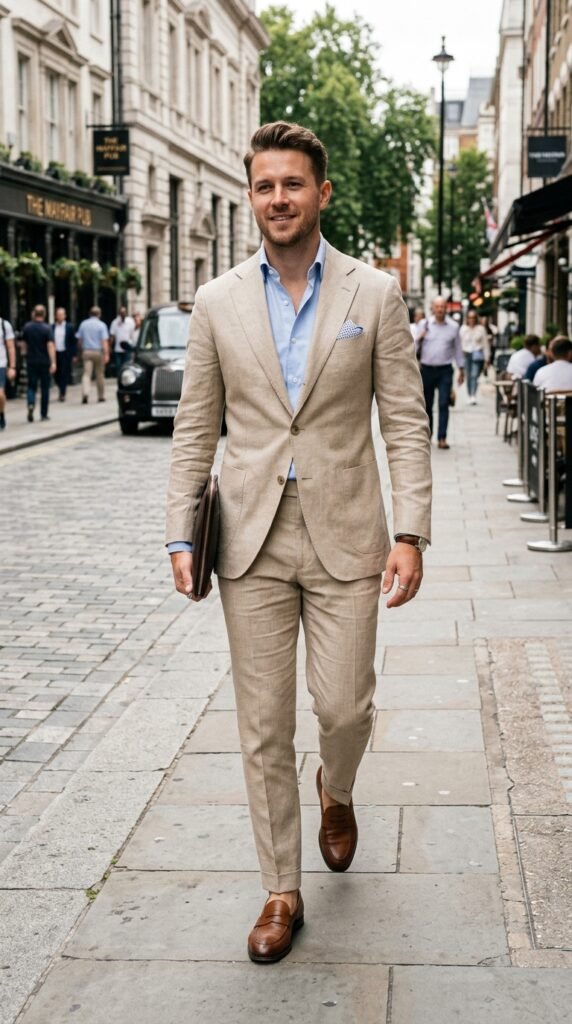
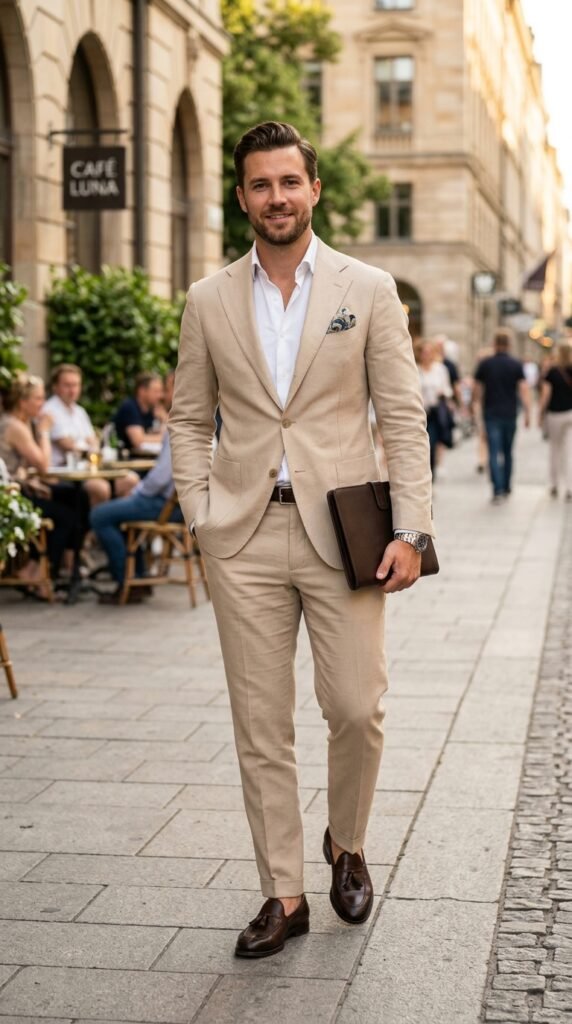
2. Stone and Sand — Quiet Mediterranean Sophistication
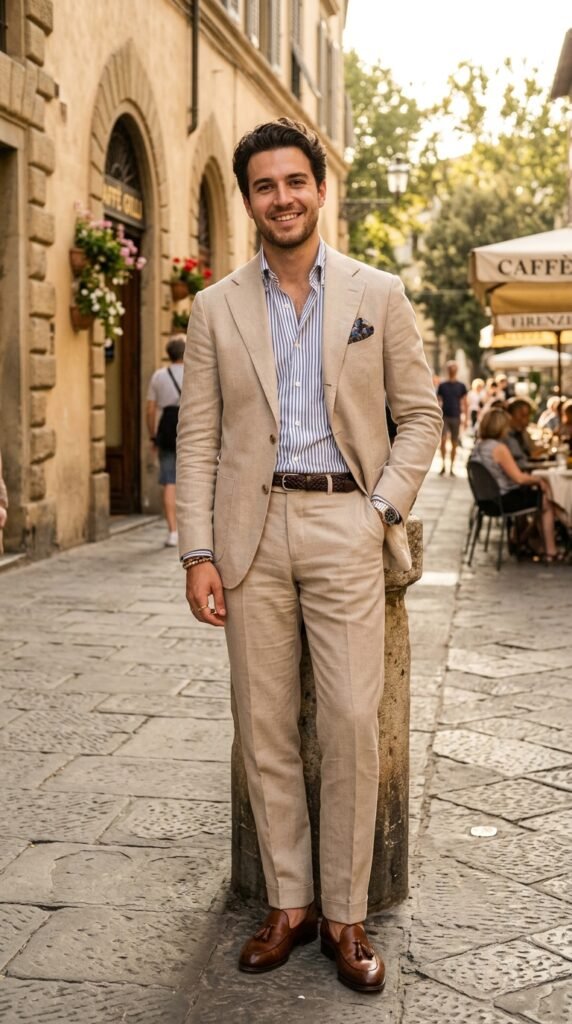
Stone, sand, and warm beige tones are the defining palette of European summer tailoring. These earthy neutrals evoke a sense of relaxed confidence that darker suits cannot replicate in warm weather.
The rule of thumb: Choose a stone tone that sits between cream and khaki — never pure cream (too bridal) and never dark tan (too safari). The ideal shade has a slightly cool undertone that prevents it from reading yellow under direct sunlight.
Stone pairs exceptionally well with:
White shirts in cotton-poplin or linen
Pale blue shirts in chambray or Oxford cloth
Burgundy or chocolate brown accessories
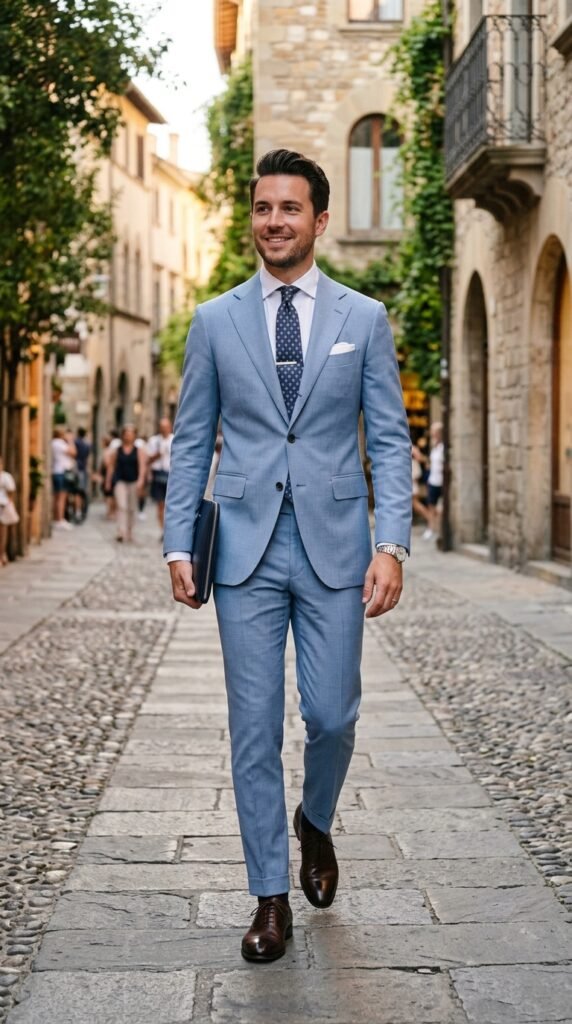
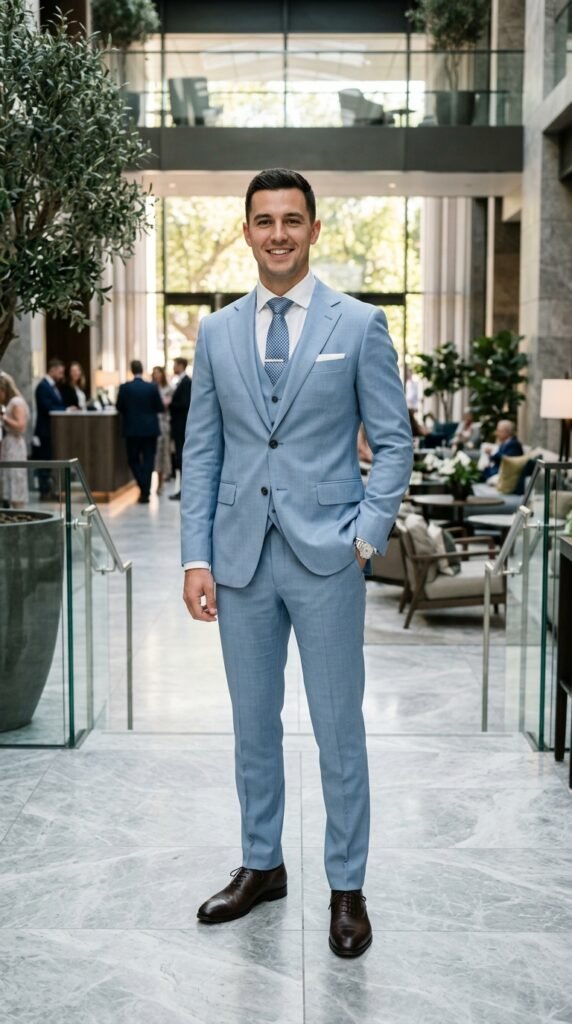
3. Pale Blue — Modern and Distinctive
Pale blue suits have surged in popularity since 2024, and the trend has matured into a genuine wardrobe staple for 2026. In a three-piece configuration, pale blue delivers a distinctive, contemporary look without veering into costume territory.
Key consideration: The blue must be muted. Tailoring experts agree that powder blue or dusty blue works; royal blue or cobalt does not. The goal is suggestion, not statement.
Pair with a white shirt exclusively. Pale blue suits become visually chaotic when combined with patterned or coloured shirts.
4. Muted Sage and Olive — The 2026 Breakout Colour
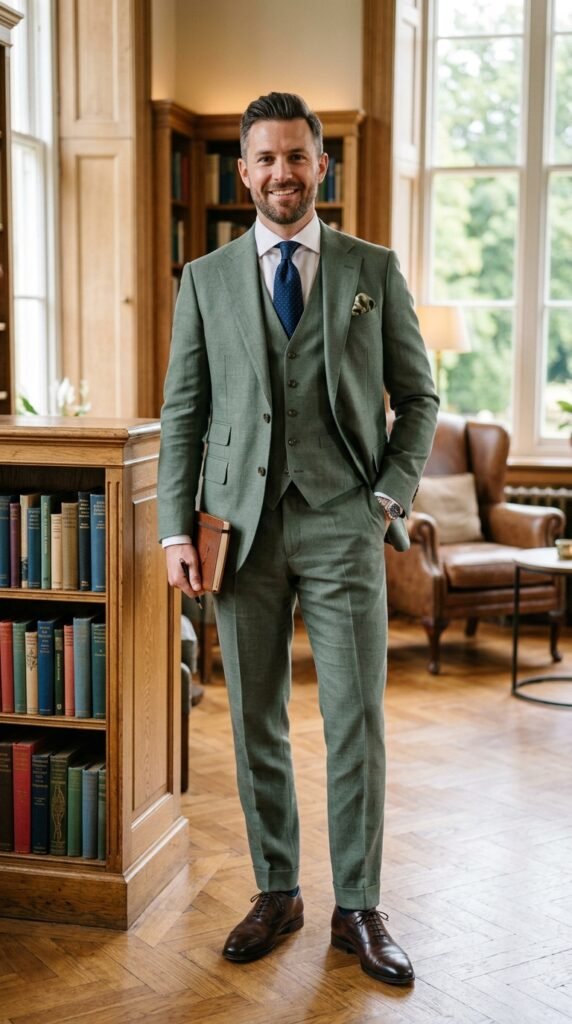
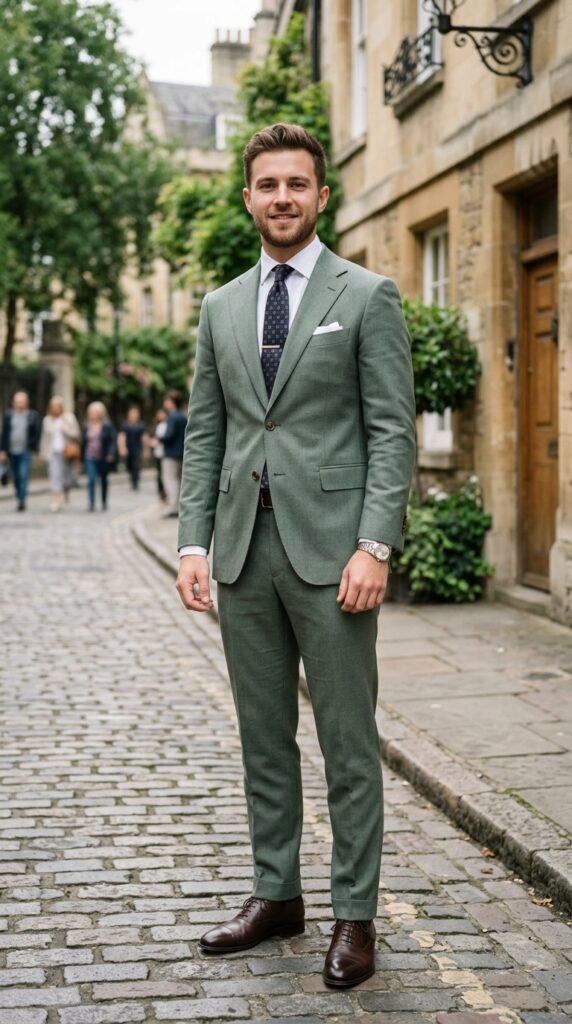
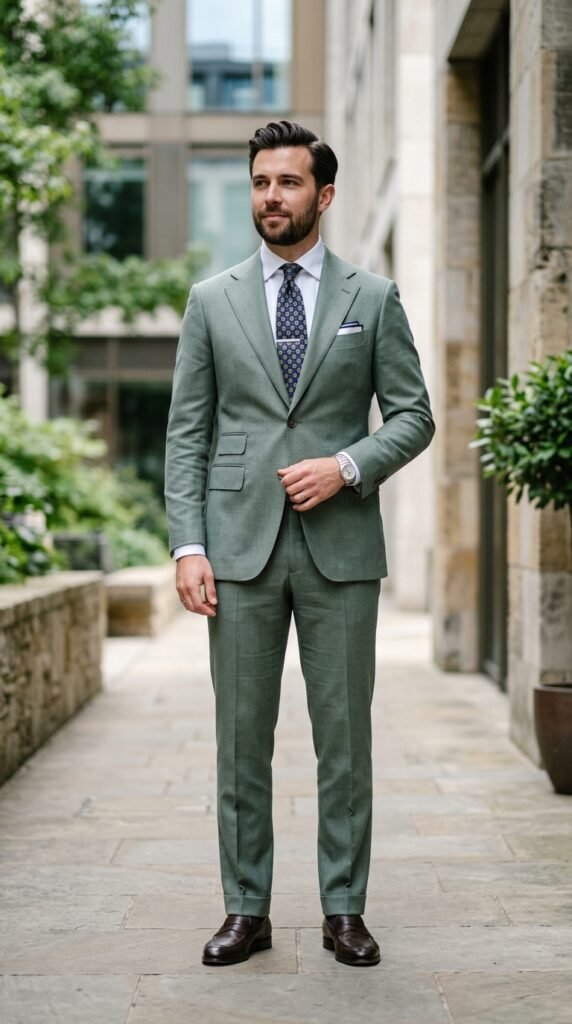
The industry standard for 2026 is a deliberate expansion of the neutral palette to include botanical greens. Sage and muted olive tones are appearing across collections from Brunello Cucinelli to Dressco Drapers, offering an alternative to the traditional grey-navy-beige rotation.
Styling note: Sage works best in linen or linen-blend fabrics where the natural texture softens the colour’s visual impact. In a smooth worsted wool, green can read corporate; in linen, it reads effortlessly refined.
Browse our 3-Piece Suits collection for seasonal colourways designed specifically for warm-weather occasions.
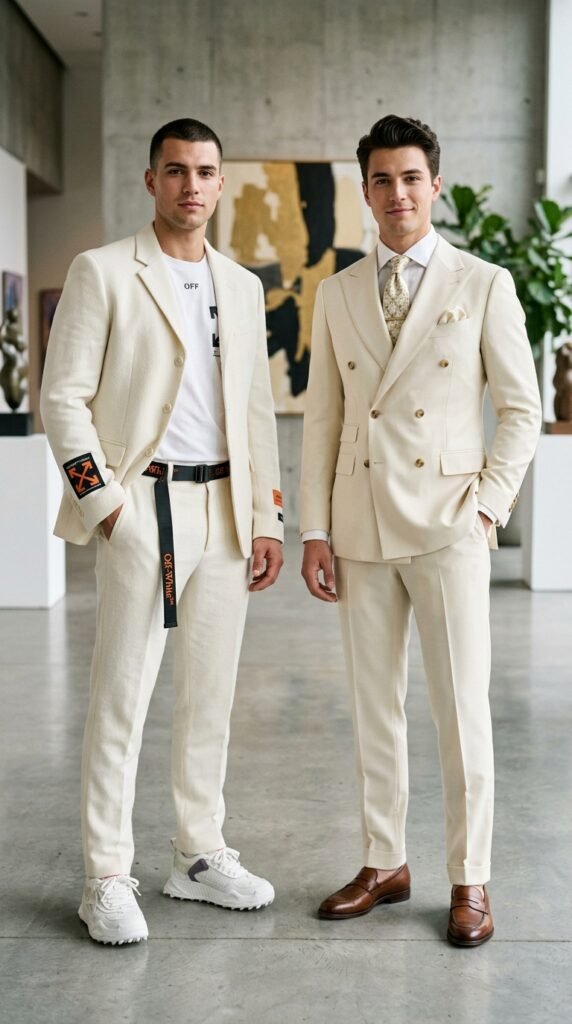
5. Off-White and Ivory — For the Confident Dresser
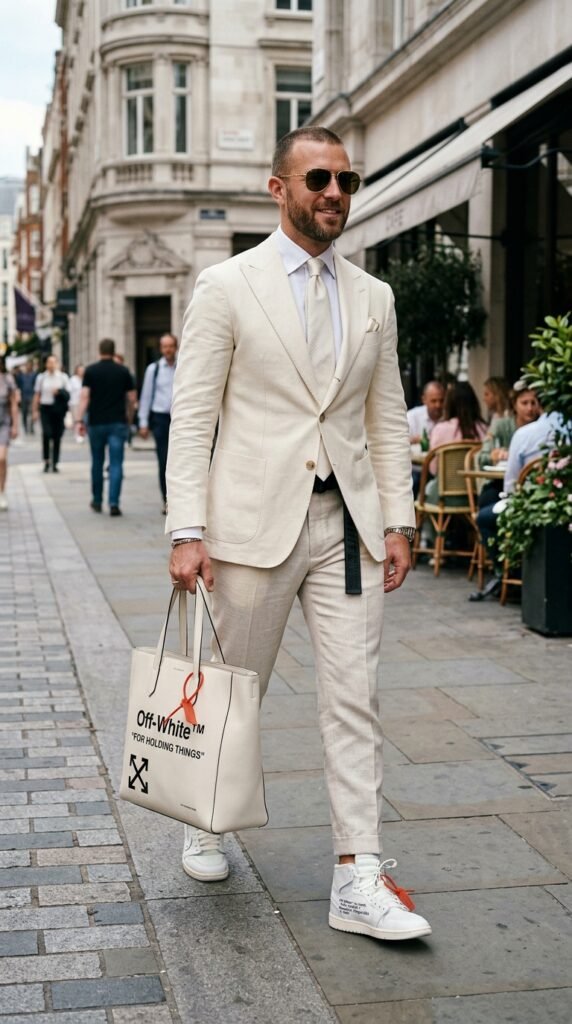
An off-white 3-piece summer suit is undeniably striking. It’s also unforgiving. Every wrinkle, stain, and construction flaw is amplified.
Who should wear it: Men who are committed to fabric quality (linen-silk blends or high-twist wool), have access to professional pressing, and are attending events where the suit will be the focal point — summer weddings, garden parties, yacht gatherings.
Who should avoid it: Anyone buying at the entry-level price tier. Budget off-white suits in synthetic fabrics look immediately cheap in a way that darker colours can disguise.
Best Patterns for a 3-Piece Summer Suit
Windowpane Check — The Definitive Summer Pattern
If you’re choosing a single pattern for your 3-piece summer suit, make it a windowpane check. The open grid creates visual interest without density, allowing the fabric’s texture and colour to remain primary.
Specifications that work:
Check spacing: 3–5cm between lines. Smaller spacing reads as autumn/winter; wider spacing reads as distinctly summer.
Line weight: Fine, single-thread lines. Thick, chalk-stripe-width lines are too heavy for warm-weather fabrics.
Colour contrast: Subtle. A light grey suit with a slightly darker grey windowpane, or a stone suit with a soft blue check.
According to The Rake, the windowpane check remains the most recommended pattern for warm-weather suiting precisely because it adds dimension without visual weight.
Micro-Houndstooth — Texture Without Loudness
A micro-houndstooth — sometimes called a puppytooth — reads as a textured solid from a distance of approximately 1.5 metres. Up close, it reveals a refined, geometric pattern.
This dual nature makes it exceptional for three-piece suiting. The waistcoat gains subtle texture that prevents it from looking flat when the jacket is removed, while the overall outfit maintains cohesion.
Best colourways for summer:
Grey-and-white micro-houndstooth
Blue-and-white micro-houndstooth
Brown-and-cream micro-houndstooth
Subtle Stripe — Use With Caution
Pinstripes and pencil stripes can work in summer three-piece configurations, but they require careful management. The vertical lines create a lengthening effect that can make the waistcoat look disproportionately narrow.
If you choose stripes:
Opt for widely spaced stripes (2cm+ apart)
Ensure the stripe colour is only 1–2 shades different from the base fabric
Avoid stripes on all three pieces simultaneously — consider a plain waistcoat in the base colour
Plain Textured Fabrics — The Sophisticated Minimalist Option
For men who prefer no pattern at all, the fabric’s texture becomes the pattern. This is where material selection becomes paramount.
The best textured summer fabrics:
Fresco wool (by Huddersfield mills like W. Bill or Dugdale Bros) — open-weave, highly breathable, 220–260gsm
Irish linen — inherently textured, 200–240gsm
Linen-wool blends (typically 60/40 or 70/30) — combines linen’s breathability with wool’s shape retention
High-twist wool — such as Super 120s in high-twist construction from mills like Loro Piana or Vitale Barberis Canonico — resists creasing while maintaining a dry, crisp hand-feel
Explore our Formal Shirts collection for lightweight options that complement textured summer suiting without adding bulk.
How to Coordinate Colours Across All Three Pieces
The Tonal Rule
The most reliable coordination method for a 3-piece summer suit is tonal consistency — all three pieces in the same colour family, with the waistcoat sitting either half a shade lighter or darker than the jacket and trousers.
This creates depth without contrast, which reads as sophisticated rather than mismatched.
The Strategic Contrast Rule
For more advanced dressers, introducing a contrast waistcoat adds visual interest. The guideline: the waistcoat should share at least one colour element with the suit.
Examples that work:
Light grey suit + pale blue waistcoat (blue echoed in a subtle windowpane on the suit)
Stone suit + cream waistcoat (tonal family maintained)
Find coordinated accessories in our Bespoke Accessories range designed to complement summer palettes.
[Image Placeholder: A man wearing a stone 3-piece summer suit with a pale blue shirt and burgundy accessories | Alt: 3-piece summer suit in stone with complementary shirt and accessory coordination]
3 Colours and Patterns to Avoid in Summer Three-Piece Suiting
Not every option works. These choices consistently undermine warm-weather elegance:
Black — Absorbs maximum heat, reads as funereal in daylight, and offers zero visual warmth. Tailoring experts agree that black 3-piece suits have no place in summer wardrobes unless attending a formal evening event after sunset.
Bold plaids and tartans — The visual density of a large-scale plaid is amplified by the waistcoat layer. Three pieces in a loud tartan creates an overwhelming pattern volume that belongs in autumn, not July.
High-contrast stripes — A dark navy suit with bright white chalk stripes is a powerful winter look. In summer, the contrast is too severe against sun-washed surroundings and natural light.
Frequently Asked Questions
What is the best colour for a 3-piece summer suit?
Light grey is the most versatile and universally flattering colour for a 3-piece summer suit. It reflects heat, pairs with every shirt and accessory combination, and works across formal and smart-casual settings. Stone beige and pale blue are strong alternatives for men seeking a more distinctive seasonal look. The industry standard for 2026 prioritises muted, earthy tones over saturated colours.
Can you wear a 3-piece suit in summer without overheating?
Yes — provided you choose the right fabric weight and construction. Tailoring experts recommend fabrics between 200gsm and 260gsm in open-weave constructions like fresco wool, linen, or high-twist wool. A half-lined or unlined jacket and an unlined waistcoat with a breathable back panel (typically in Bemberg lining or cotton) reduce heat retention by approximately 25–30% compared to fully lined alternatives.
What patterns are best for summer 3-piece suits?
Windowpane checks with 3–5cm spacing are the most recommended summer pattern for three-piece configurations. Micro-houndstooth offers subtle texture that enhances visual interest without pattern density. For minimalists, plain textured fabrics in fresco or hopsack weaves provide all the visual depth needed without any formal pattern.
Should the waistcoat match the suit exactly in summer?
For most men, yes — a matching waistcoat in the same fabric creates the cleanest, most cohesive look. However, a contrast waistcoat in a complementary tone (e.g., cream waistcoat with a stone suit) is increasingly acceptable in 2026 smart-casual and wedding contexts. The critical rule is that the waistcoat must share at least one colour element with the jacket and trousers.
Is linen or wool better for a summer 3-piece suit?
A linen-wool blend (typically 60% linen, 40% wool) offers the best of both materials — linen’s breathability and textural character combined with wool’s shape retention and wrinkle resistance. Pure linen suits wrinkle significantly within 30 minutes of wear, which can undermine the structured appearance a 3-piece suit demands. Pure wool in a high-twist or fresco weave is the alternative for men who prefer a smoother, more controlled drape.
Final Perspective
The right colours and patterns for a 3-piece summer suit aren’t a matter of personal taste alone — they’re determined by the intersection of fabric science, light behaviour, temperature management, and visual proportion. Light grey, stone, and pale blue endure as the foundation of warm-weather elegance precisely because they solve all four variables simultaneously.
Choose your colourway with intention. Select your pattern with restraint. And invest in a fabric that works as hard in 34°C heat as it does under the soft glow of an evening reception.
That’s how a summer suit earns its place in a permanent wardrobe.
Share your love
Newsletter Updates
Enter your email address below and subscribe to our newsletter