Style a 3-Piece Suit on a Budget: 9 Proven Secrets That Never Look Cheap
Learning how to style a 3-piece suit on a budget is one of the most valuable skills in modern menswear. The waistcoat adds a layer of visual sophistication that single- and two-piece suits simply cannot replicate — yet many men assume the look demands a premium price tag.
The difference between a budget 3-piece suit that looks expensive and one that looks obviously cheap comes down to nine specific decisions — none of which require spending more money. They require spending money more intelligently.
This guide delivers the exact framework. Every recommendation is grounded in tailoring principles, not trends, so the advice remains relevant whether you’re dressing for a 2026 boardroom, a wedding, or a high-stakes interview.
Why a 3-Piece Suit Offers the Best Value in Menswear
Trousers worn independently with knitwear or a casual shirt
No other single garment purchase offers this range. Pound for pound, the 3-piece suit delivers more cost-per-wear value than any other item in a man’s wardrobe.
9 Proven Ways to Style a 3-Piece Suit on a Budget Without Looking Cheap
1. Choose Fabric Over Brand — Every Time
This is the single most important rule. A suit’s perceived quality is determined primarily by its fabric, not by the label sewn inside.
What to look for on a budget:
Super 100s to Super 120s wool — This is the sweet spot. Fine enough to drape well, durable enough to resist premature wear. Anything below Super 100s can feel coarse; anything above Super 150s is fragile and unnecessary at this price point.
Worsted wool weaves — They resist wrinkles, hold structure, and photograph beautifully.
Wool-polyester blends (max 30% poly) — Tailoring experts agree that a small percentage of synthetic fibre can actually improve durability without noticeably reducing quality.
What to avoid absolutely: 100% polyester, anything visibly shiny, and ultra-thin fabrics below 220gsm that reveal every structural shortcut underneath.
According to GQ’s suiting guide, fabric quality is the number-one factor that separates affordable suits that look premium from those that look disposable.
2. Stick to Three Colourways That Always Read Expensive
Colour choice is a zero-cost decision that dramatically impacts perceived value. The rule of thumb for budget 3-piece suits is simple: the quieter the colour, the more expensive it looks.
The three most reliable options:
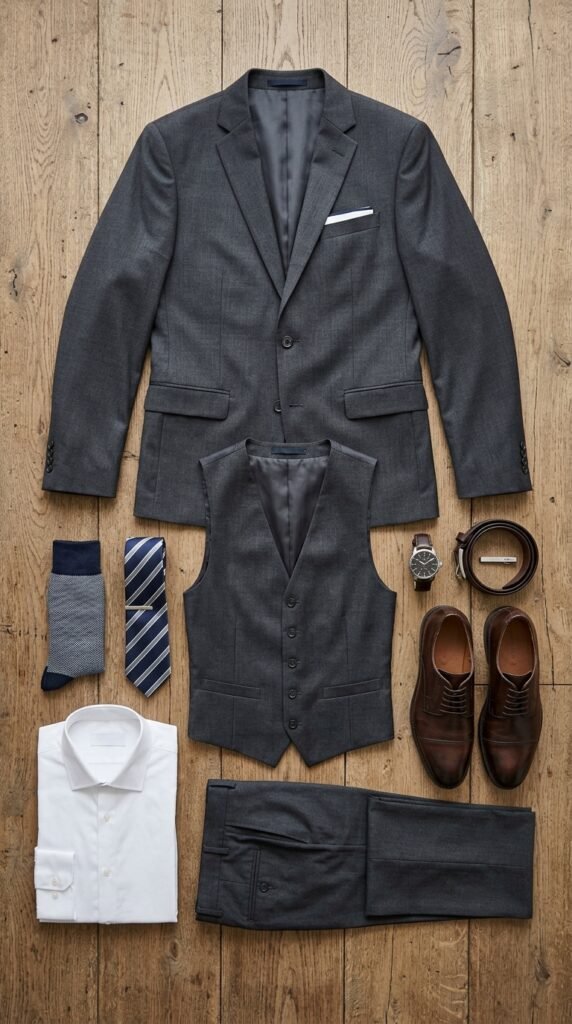
Charcoal grey — The most versatile and forgiving. Hides minor construction flaws and pairs with virtually every shirt and accessory combination.
Navy blue — Slightly less formal than charcoal but equally refined. Ideal for men under 35.
Mid-grey — A sophisticated alternative that works across seasons. Best in a matte finish.
Avoid black unless you’re attending a formal evening event. Budget suits in black tend to look flat and plasticky, whereas the same price point in charcoal or navy produces a richer, more dimensional appearance.
3. Invest 15% of Your Budget in Tailoring Alterations
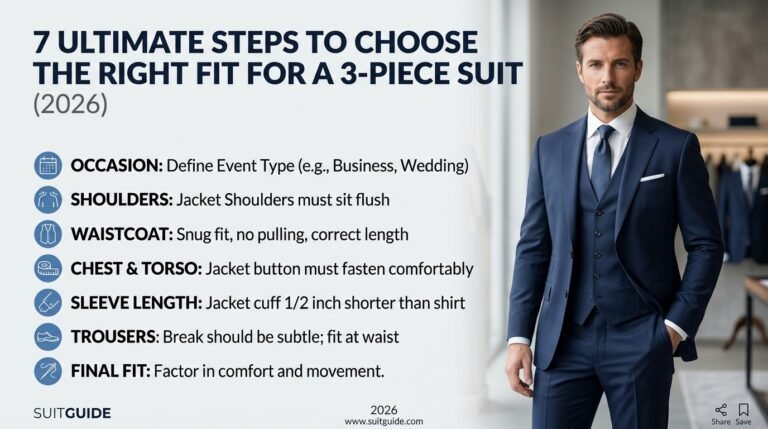
This is the secret that separates men who look expensive from men who merely wear expensive clothes. Tailoring experts agree that £40–£60 in strategic alterations transforms the fit of a budget suit more effectively than spending an additional £200 on the suit itself.
The essential alterations for a budget 3-piece suit:
Jacket sleeves shortened to show exactly 1.0–1.5cm of shirt cuff (the industry standard)
Jacket body taken in at the side seams for waist suppression
Trouser hem adjusted for a clean half-break or no-break finish
Waistcoat back panel tightened to eliminate billowing
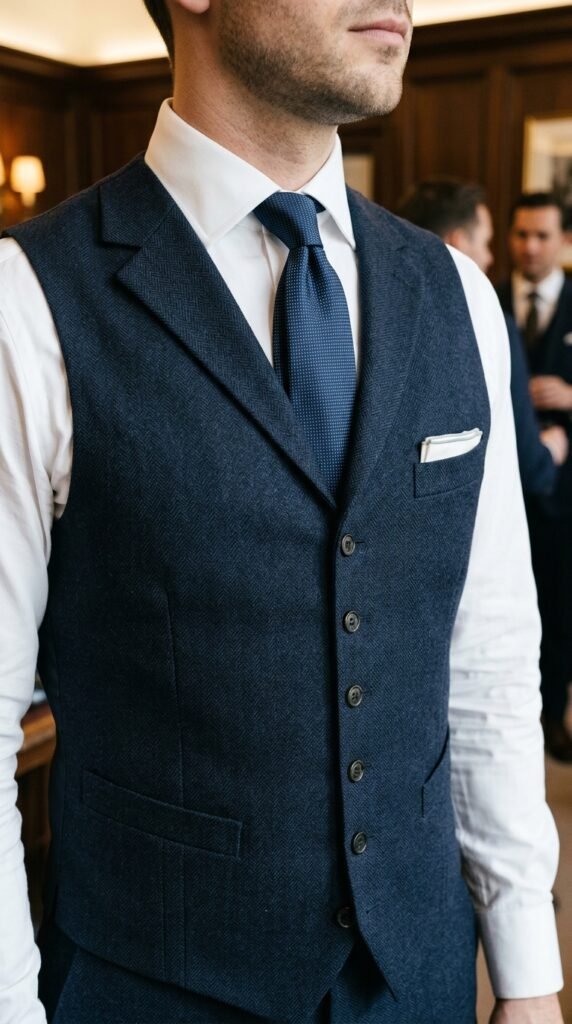
A waistcoat that gaps at the sides or rides up when you sit instantly signals a cheap suit. A waistcoat that lies flat against the shirt, with the bottom point just covering the trouser waistband, signals intention and quality.
4. Master the Waistcoat Fit — It’s the Centrepiece
The waistcoat is what makes a 3-piece suit a 3-piece suit. When it fits correctly, it elevates everything around it. When it doesn’t, it actively undermines the entire outfit.
The non-negotiable fit rules:
The waistcoat should cover the trouser waistband completely — no shirt visible between waistcoat and trousers
The bottom button is traditionally left undone
The back strap or buckle should create a snug fit without visible pulling at the front
5. Pair With High-Quality Shirts That Cost Less Than You Think
A premium shirt is the highest-impact, lowest-cost upgrade available. A £30–£50 shirt in the right fabric and collar style will outperform a £15 alternative by an order of magnitude.
Budget shirt specifications that look expensive:
Fabric: 80s–100s two-ply cotton or cotton-poplin
Collar: Semi-spread or cutaway (both complement waistcoat necklines perfectly)
Colour: White or pale blue — nothing else at this price tier
Cuffs: Barrel cuffs with a clean, single-button closure
Browse our curated Formal Shirts collection for options engineered to pair with 3-piece configurations.
6. Accessorise Strategically, Not Excessively
Accessories are where budget-conscious men either win or lose. The rule: fewer pieces, higher quality per piece.
A budget-friendly accessory strategy for a 3-piece suit includes:
One quality tie in a grenadine weave or plain silk — £25–£40. Grenadine is a textured, open-weave silk that looks handmade and artisanal regardless of price.
One white linen pocket square — £10–£15. A clean TV fold. Nothing elaborate.
A leather belt that matches your shoes exactly — This is non-negotiable. Mismatched leather is the fastest way to cheapen an outfit.
Tailoring experts agree that shoes are the first thing discerning observers notice. You don’t need Goodyear-welted benchmade footwear on a tight budget, but you do need shoes that meet minimum standards.
The budget shoe checklist:
Oxford cap-toe in dark brown or burgundy (not black, unless the suit is charcoal and the occasion is formal)
Leather sole or high-quality rubber sole — avoid chunky, overly casual soles
Clean, polished, and well-maintained. A £60 shoe that’s been polished weekly looks better than a £300 shoe that’s scuffed and neglected.
8. Mind the Details That Cost Nothing
Several zero-cost decisions separate a cheap-looking suit from a polished one:
Always button correctly. Middle button fastened on a two-button jacket. Bottom button of the waistcoat undone.
Remove all external brand tags and tacking stitches. The X-stitch on jacket vents and the label on the sleeve should be removed before first wear.
Press your suit. A freshly steamed suit in a budget fabric will outperform a wrinkled suit in Loro Piana cashmere every single time.
Use cedar shoe trees and proper hangers. Both extend garment life and maintain shape between wears.
9. Build Over Time — Don’t Buy Everything at Once
The smartest budget strategy isn’t buying one cheap suit with all accessories simultaneously. It’s buying the best suit you can afford now and incrementally upgrading accessories over subsequent months.
A practical 90-day plan:
Month 1: Purchase the suit + essential alterations + one white shirt
Month 2: Add quality shoes + a matching belt
Month 3: Add a tie, pocket square, and a second shirt in pale blue
This phased approach ensures every element meets a quality threshold rather than distributing a limited budget too thinly across every category.
The Cost Breakdown: What a Quality Budget 3-Piece Suit Actually Costs
Item
Recommended Budget
3-Piece Suit (Super 110s wool or blend)
£200–£350
Tailoring Alterations
£40–£60
Formal Shirt (cotton-poplin)
£30–£50
Shoes (leather Oxford)
£60–£100
Belt (matching leather)
£20–£35
Tie (grenadine or plain silk)
£25–£40
Pocket Square (white linen)
£10–£15
Total
£385–£650
For under £650, you achieve a complete 3-piece look that competes visually with outfits costing three to four times as much. The key variable is always fit and fabric — never the logo.
Frequently Asked Questions
How can I style a 3-piece suit on a budget for a wedding?
Choose a navy or mid-grey 3-piece suit in worsted wool, pair it with a white semi-spread collar shirt, and add a textured silk tie in a muted tone like dusty rose or slate blue. Ensure the waistcoat fits snugly, and invest in proper alterations. This combination reads elegant and intentional without requiring wedding-specific spending. You can rewear every element for professional settings afterward.
What is the cheapest fabric that still looks expensive in a 3-piece suit?
Super 100s to Super 120s worsted wool in charcoal or navy offers the best quality-to-price ratio available. Tailoring experts agree that these yarn counts provide sufficient fineness for a refined drape while maintaining the durability needed for regular wear. Expect to find quality options in the £200–£350 range for a full 3-piece configuration.
Should I buy a budget 3-piece suit online or in-store?
Both channels work if you follow the right protocol. In-store allows you to assess fabric hand-feel and initial fit. Online often offers better pricing but requires you to know your measurements precisely. Regardless of where you buy, budget £40–£60 for a local tailor to adjust the fit — this single step matters more than the purchase channel itself.
Can I wear a 3-piece suit without a tie and still look polished?
Yes — and in 2026, this is increasingly the preferred approach for smart-professional settings. The waistcoat provides enough visual structure to compensate for the absence of a tie. The critical requirement is a shirt collar with sufficient body to hold its shape. A cutaway collar in a heavier cotton-poplin (120gsm+) works perfectly. Avoid soft, unstructured collars that collapse without a tie’s support.
How many 3-piece suits do I need as a starting wardrobe?
Two suits form a functional rotation: one in charcoal and one in navy. This combination covers every professional, social, and semi-formal scenario. With proper care — cedar hangers, regular steaming, 48-hour rest between wears — two quality budget suits will outperform and outlast four cheap ones purchased simultaneously.
Final Perspective
The ability to style a 3-piece suit on a budget without looking cheap isn’t about finding secret discount codes or obscure brands. It’s about understanding what actually makes a suit look expensive — fabric integrity, precise fit, colour discipline, and restrained accessorising — and directing every available pound toward those factors.
The men who dress best at any price point are the ones who understand where quality matters most. Now you do too.
Share your love
Newsletter Updates
Enter your email address below and subscribe to our newsletter