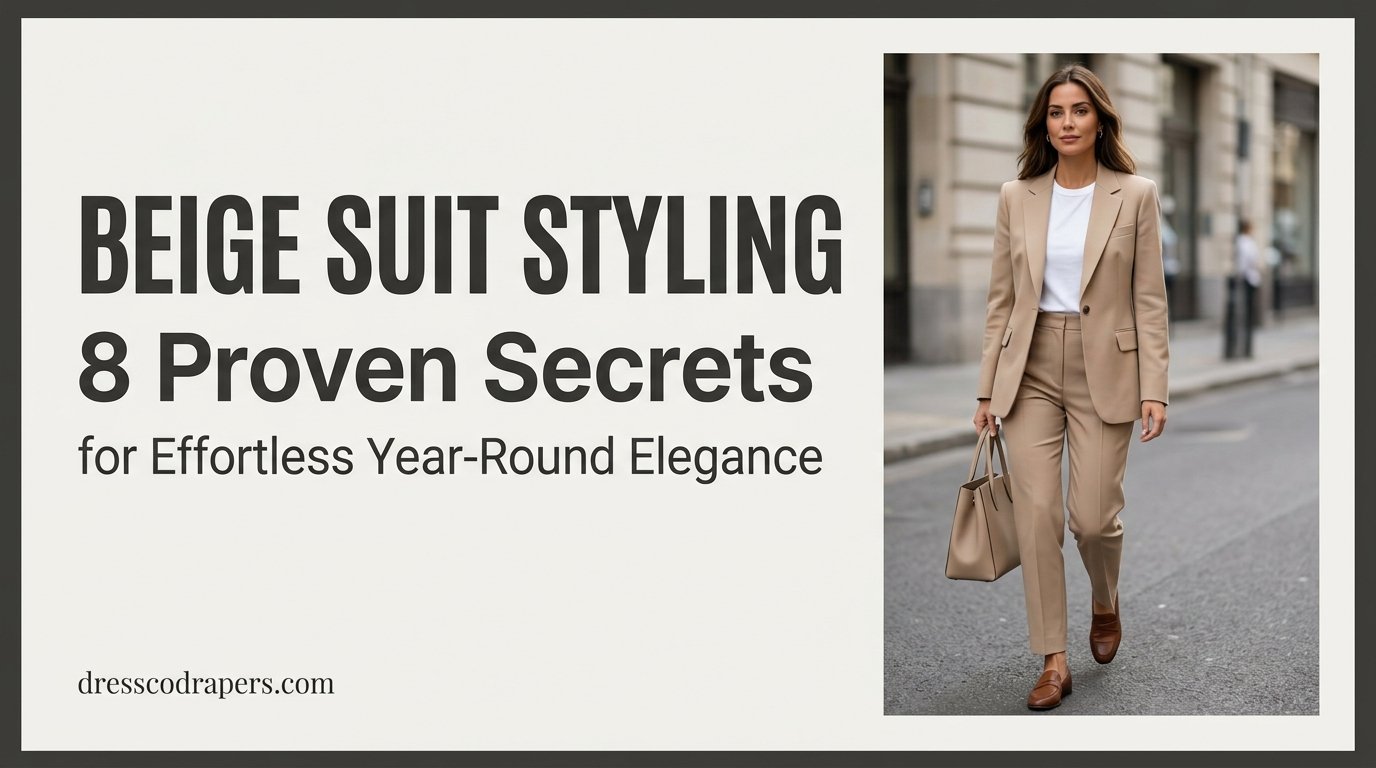
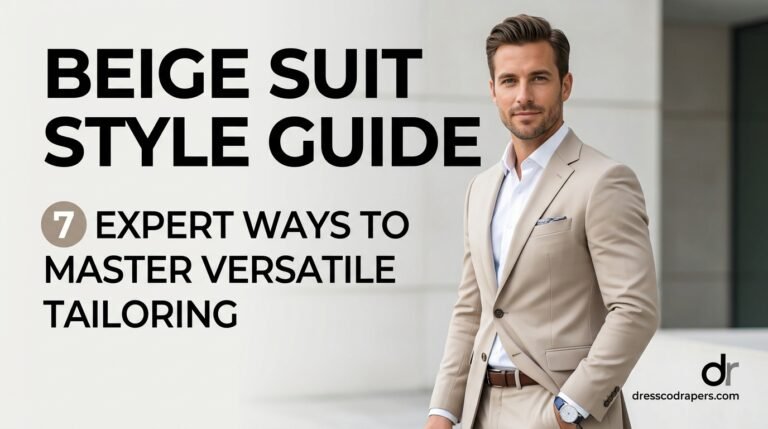
Beige Suit Styling: 8 Proven Secrets for Effortless Year-Round Elegance
Beige suit styling is the skill that separates men who simply own suits from men who understand how to dress with genuine intention across every season, occasion, and context.
Most men default to navy and charcoal because those colors feel safe. They are safe. But safe rarely commands a second glance. The man who wears beige confidently—with the right fabric, fit, and accessories—demonstrates a level of sartorial intelligence that darker suits cannot communicate.
At Dressco Drapers, we have spent years guiding clients through the nuances of lighter-toned tailoring. Our expertise in luxury menswear and bespoke construction has taught us that beige is not a seasonal novelty or a casual afterthought. It is a legitimate year-round power color when deployed with the technical knowledge and styling precision this guide provides.
If you are a man between 25 and 40 building a wardrobe that works harder, looks sharper, and communicates more—this is the most important color lesson you will learn this year.
Why the Beige Suit Is the Most Underrated Power Piece in Menswear
Beige occupies a rare position in the menswear spectrum. It is formal enough for professional settings yet relaxed enough for social occasions. It is neutral enough to pair with virtually anything yet distinctive enough to separate you from every navy and charcoal suit in the room.
The Distinction Advantage
At any professional event, count the suits. You will see navy. Charcoal. Black. Repeat.
The man in a well-tailored beige suit stands in a category of his own—not because he is trying to be different, but because he understands that distinction and professionalism are not mutually exclusive.
The Versatility Equation
A single beige suit, properly styled, yields more outfit combinations than any dark suit in your wardrobe. The neutral base acts as a canvas that accepts bold accessories, muted pairings, seasonal textures, and tonal layering with equal fluency.
This is not theory. This is mathematics. Beige pairs harmoniously with more shirt colors, tie tones, and shoe shades than navy, charcoal, or black—because it sits in the middle of the warm neutral spectrum rather than at an extreme.
The Psychology and Visual Science Behind Beige
Understanding why beige works starts with understanding how it is perceived.
Color Psychology in Professional Contexts
Dark suits signal conformity, authority, and tradition. These are valuable signals—but they are also expected.
Beige signals creativity, approachability, confidence, and independent thinking. In industries where originality matters—consulting, architecture, media, entrepreneurship, creative leadership—a beige suit communicates that you think differently without being disruptive.
Research in color psychology consistently shows that warm neutrals like beige create perceptions of trustworthiness and openness. In client-facing roles, these perceptions can be the subtle difference between rapport and rigidity.
Skin Tone Universality
One of beige’s most powerful and least discussed advantages is its near-universal compatibility with skin tones.
Cooler complexions pair beautifully with warmer beige tones—camel, sand, golden tan.
Warmer complexions are complemented by cooler beige variants—stone, greige (grey-beige), taupe.
Medium complexions work across the entire beige spectrum.
This universality means that beige suit styling works for virtually every man, regardless of ethnicity or complexion—a claim that very few suit colors can make.
8 Proven Styling Secrets for Wearing a Beige Suit Year-Round
These are the principles that transform beige from “that light suit I wear in summer” into a year-round wardrobe cornerstone.
Secret 1: Match Fabric Weight to Season, Not Color to Season
The biggest misconception in menswear is that beige is a summer color. It is not. Beige is a neutral tone that transcends seasons. What determines seasonal appropriateness is fabric weight and texture, not color.
Season
Fabric
Weight (GSM)
Texture
Spring
Tropical wool, cotton-linen
200–240
Crisp, open weave
Summer
Linen, linen-wool blend
180–220
Relaxed, natural slub
Autumn
Worsted wool, cavalry twill
260–300
Smooth, structured drape
Winter
Flannel, wool-cashmere
300–360
Soft, warm, substantial
A beige flannel suit in 320 GSM is just as seasonally appropriate in December as a beige linen suit is in July. The fabric tells the season. The color tells your style.
Secret 2: Build Contrast Through Accessories, Not the Suit
Beige is a canvas. Its power lies in what you place against it.
High contrast: Dark accessories (navy tie, burgundy pocket square, chocolate shoes) create visual punch and formal authority.
Low contrast: Tonal accessories (cream tie, ivory pocket square, tan shoes) create a sophisticated, monochromatic flow.
Selective contrast: One bold accent piece (a deep forest green tie, a cobalt pocket square) against otherwise muted accessories creates a focal point without chaos.
The suit stays neutral. The accessories do the talking.
Secret 3: Never Match Your Shoes to Your Suit
This is the most common beige suit styling error. Tan or beige shoes against a beige suit create a washed-out, monolithic block of color with no definition.
Instead:
Dark brown creates clean, grounding contrast.
Burgundy or oxblood introduces warmth with sophistication.
Chocolate suede adds texture variation for smart-casual contexts.
Cognac works if it is noticeably darker or richer than the suit tone.
The shoe must be visibly distinct from the trouser. This separation defines your silhouette from the ankle down.
Secret 4: Invest in the Right Shirt Foundation
The shirt beneath a beige suit carries more visual weight than it does beneath darker suits. Against a light neutral background, shirt color, texture, and collar shape are all highly visible.
The hierarchy of shirt choices for beige suit styling:
White poplin or twill — The cleanest, most versatile foundation. Works across every formality level.
Light blue end-on-end or chambray — Adds subtle warmth and depth without competing.
Pale pink — A confident pairing that works beautifully in spring and summer.
Lavender — Modern, distinctive, excellent against warmer beige tones.
Cream or ecru — For full tonal dressing. Requires confidence and careful accessory selection to avoid looking washed out.
Avoid: Dark or heavily saturated shirts (black, deep red, bright patterns). These create jarring contrast against beige that looks disjointed rather than intentional.
Explore our curated range of formal shirts designed to complement lighter suit tones.
Secret 5: Texture Is Your Greatest Weapon
On dark suits, texture is subtle. On beige, every weave, nap, and surface detail is amplified by the lighter tone.
This is an advantage—not a limitation.
Flannel beige in autumn and winter looks rich, tactile, and intentional.
Linen beige in summer communicates relaxed sophistication.
Hopsack or fresco weave in spring adds visual depth without weight.
Cavalry twill creates subtle diagonal lines that add movement and visual interest.
Smooth worsted provides the cleanest, most corporate-appropriate surface.
Choose texture deliberately. It is the difference between a beige suit that looks bland and one that looks exceptional.
Secret 6: Layer Strategically for Year-Round Depth
Layering transforms a beige suit across seasons and formality levels.
Spring/Autumn layering:
A fine-gauge merino crew neck in navy, charcoal, or burgundy beneath the jacket adds warmth and color contrast.
A lightweight cotton vest in a complementary tone adds a visible middle layer.
Winter layering:
A cashmere scarf in deep tones (forest green, burgundy, navy) creates a striking contrast at the neckline.
A topcoat in camel or charcoal over the beige suit produces one of menswear’s most sophisticated cold-weather combinations.
Summer adaptation:
Remove the jacket. Wear a well-fitted dress shirt with the trousers only. The beige trouser with a white or light blue shirt is a warm-weather staple.
For a 3 piece suit in beige, the waistcoat without the jacket is a masterful smart-casual summer look.
Secret 7: Control Your Undershirt Visibility
This is the detail that most men overlook entirely—and it matters significantly more with beige than with any darker suit.
Light-colored suit fabrics are semi-translucent under certain lighting conditions. A white crew-neck undershirt beneath a white dress shirt beneath a beige jacket creates visible layering lines through the fabric.
The solution:
Wear a V-neck undershirt in a skin-matching tone (not white). This eliminates visible necklines and prevents show-through under lighter fabrics.
Alternatively, choose dress shirts with sufficient fabric opacity (100+ two-ply cotton minimum) to prevent undershirt visibility entirely.
Secret 8: Own the Confidence Gap
Most men hesitate to wear beige because it feels exposed. Dark suits provide a psychological safety net—they are expected, they blend, they do not draw attention.
Beige does the opposite. It announces your presence. It says: I am confident enough to stand out, and refined enough to do it with taste.
This confidence gap is precisely what makes beige suit styling powerful. The man who wears beige well projects self-assurance that transcends clothing. That signal is read instantly by colleagues, clients, and everyone in the room.
Beige Suit by Season: Complete Fabric and Texture Guide
Important note: Accept linen’s natural wrinkling. A perfectly pressed linen beige suit looks artificial. Relaxed creasing is part of the fabric’s character and signals that you understand the material.
Texture: Smooth to moderately textured, structured drape
Beige tone: Deeper camel, warm taupe, golden beige
Styling approach:
Ecru or cream dress shirt for tonal depth
Burgundy silk tie or forest green wool tie
Dark brown or burgundy leather Oxfords
Wool pocket square in complementary earth tones
Optional: navy or charcoal merino crew neck beneath the jacket
Winter Beige Suit Styling
Ideal fabrics: Wool flannel (300–360 GSM), wool-cashmere blend, heavy twill
Texture: Soft, napped, substantial hand feel
Beige tone: Deep camel, warm biscuit, rich sand
Styling approach:
White or pale blue twill shirt
Dark navy or charcoal tie in wool or cashmere-silk blend
Chocolate brown or oxblood leather Oxfords
Cashmere scarf in burgundy or forest green
Charcoal or navy overcoat layered above
Key insight: Winter beige flannel is one of menswear’s most sophisticated fabrics. The napped surface absorbs light differently than summer linens—it appears warmer, richer, and more intentional. This is where beige suit styling reaches its highest expression.
Solid navy or burgundy silk tie (7–8.5 cm width matching lapel proportions)
White linen pocket square, TV fold
Dark brown cap-toe Oxfords in polished calfskin
Silver or gunmetal cufflinks
Fabric choice for business: Smooth worsted wool in 260–280 GSM. The clean surface reads as professional and structured.
Smart-Casual and Creative Professional
Beige suit jacket with dark indigo or charcoal trousers (or full suit)
Light blue chambray shirt, open collar, no tie
Brown suede loafers or monk straps
Pocket square in a muted pattern
Leather-strap dress watch
Weddings and Celebrations
Full beige suit (3 piece if available) in linen-wool or tropical wool
White or pale pink shirt
Floral or patterned silk tie for celebratory personality
Pocket square that complements (not matches) the tie
Polished brown Oxfords or Derbies
Boutonnière if appropriate
For wedding-ready options, explore our 3 piece suit collection in seasonally appropriate beige tones.
Weekend and Social Occasions
Beige trousers with a navy blazer or linen shirt
No tie, open collar or Henley beneath
Suede Chelsea boots or clean minimalist sneakers
Minimal accessories—watch only
Color Combinations That Work With a Beige Suit
Understanding color pairing is the foundation of confident beige suit styling. These combinations are tested, proven, and endorsed by our styling team at Dressco Drapers.
High-Impact Combinations
Suit
Shirt
Tie
Shoes
Effect
Sand beige
White
Navy silk
Dark brown Oxford
Classic authority
Camel beige
Light blue
Burgundy grenadine
Oxblood Derby
Warm sophistication
Stone beige
White
Forest green wool
Chocolate suede
Earthy distinction
Golden beige
Pale pink
Navy knit
Cognac monk strap
Modern confidence
Taupe beige
Lavender
Charcoal silk
Dark brown whole-cut
Creative professionalism
Combinations to Avoid
Beige suit + black shirt: Harsh contrast that looks dated and nightclub-adjacent.
Beige suit + beige tie + tan shoes: Zero contrast creates a monolithic, washed-out appearance.
Beige suit + bright red tie: The combination feels costumish against a light neutral background.
Beige suit + black shoes: Black leather against beige creates a jarring, disconnected bottom half. Brown family is always superior.
Technical Construction Details for Beige Suits
Why Construction Matters More in Beige
Light-colored fabrics are less forgiving than dark ones. Every construction flaw—puckering, bubbling interlining, uneven stitching, lapel curl—is amplified by the lighter surface.
This is why construction quality is disproportionately important when investing in a beige suit.
What to Look For
Full-canvas or half-canvas interlining. Fused construction degrades faster in any fabric, but the telltale bubbling and separation is visually obvious on beige fabrics far sooner than on navy or charcoal.
Pick stitching at 5–6 SPI along lapel edges indicates hand-finishing quality.
Structural seam stitching at 8–10 SPI ensures clean, durable lines.
Bemberg (cupro) lining rather than polyester. Beige suits in warm conditions demand breathable lining to prevent moisture buildup that shows through lighter fabric.
Horn or corozo nut buttons in warm tones—amber, tortoiseshell, or matte tan. Cheap plastic buttons are more noticeable against beige than against dark fabrics.
Clean interior finishing. In beige, any interior construction shortcut—raw edges, loose threads, unfinished seams—affects how the suit drapes on the outside.
Super Number Guidance for Beige
Super 110s–120s: Best for daily-wear beige suits. Durable, wrinkle-resistant, holds structure well.
Super 120s–130s: The sweet spot for professional and special-occasion beige suits. Refined drape with moderate resilience.
Super 140s+: Reserve for infrequent-wear occasions. The luxurious hand feel is exquisite, but lighter fabrics in higher super numbers are more prone to visible wear.
2026 Trends Redefining Beige Suit Styling
The 2026 fashion season is actively expanding beige’s reach and relevance. Here is what is reshaping the landscape.
The Expanded Beige Spectrum
Traditional “beige” is giving way to a family of nuanced neutrals: oat milk, biscuit, warm stone, sand dune, camel, wheat, and greige. Each variation carries a slightly different undertone—warm, cool, golden, grey-adjacent—offering unprecedented personalization within the neutral category.
Textured Beige Over Flat Beige
The 2026 direction is decisively toward birdseye, hopsack, herringbone, and micro-check weaves in beige tones. Flat, smooth beige fabrics are being replaced by surfaces with visual depth and tactile interest.
This trend is a significant advantage. Textured beige prevents the “washed out” appearance that flat beige can create, adding dimension and richness that keeps the eye engaged.
Tonal Dressing in Beige
One of 2026’s defining movements: wearing beige from head to toe in varying tones and textures. A camel jacket, oat waistcoat, stone trousers, cream shirt, and tan suede shoes—all within the beige family, but with enough tonal variation to create depth.
This approach requires confidence and precise tonal calibration. When executed correctly, it is one of the most sophisticated looks in contemporary menswear.
Sustainable Beige Fabrication
Fabric mills are producing naturally undyed wools, organic cotton-linen blends, and recycled merino that inherently fall within the beige spectrum. The natural color of undyed wool is, itself, a warm beige—making sustainability and beige suit styling naturally aligned in 2026.
Contrast Waistcoats With Beige Suits
Pairing a navy, charcoal, or olive waistcoat beneath a beige suit jacket creates a modern, layered combination that adds structure and visual interest to the neutral tone. This trend bridges the gap between classic three-piece formality and creative individual expression.
Care and Maintenance for Light-Colored Suits
Beige demands more attentive care than darker suits. Every stain, mark, and wrinkle is more visible. But with proper maintenance, a quality beige suit will serve you for years.
Daily Care Protocol
Hang on a wide, contoured wooden hanger immediately after removal. Shoulder shape preservation is critical.
Brush with a natural bristle garment brush after every wear, paying special attention to the collar, lapels, and trouser cuffs where debris accumulates.
Spot-check for stains before storing. On beige fabric, stains set faster and become more visible with time. Address any marks within hours, not days.
Allow 48-hour rest between wears to let wool fibers recover shape and release moisture.
Cleaning Strategy
Dry clean conservatively: Maximum 2–3 times per year. Over-cleaning accelerates fabric aging—and on beige, aged fabric shows discoloration and fiber thinning more obviously.
Spot clean immediately when stains occur. Blot—never rub—with a clean damp cloth and mild detergent. Test cleaning solutions on an interior seam first.
Steam between dry cleanings to refresh fabric and release wrinkles. A handheld garment steamer is essential equipment for beige suit ownership.
Never iron directly on the fabric surface. Use a pressing cloth to prevent shine marks, which are especially visible on lighter fabrics.
Stain Prevention Strategies
Apply a fabric protector spray (silicone-free, designed for natural fibers) before first wear. This creates an invisible barrier that repels liquid stains and gives you time to blot before absorption.
Carry a stain removal pen when wearing beige to events involving food or drink. Immediate treatment prevents permanent marking.
Avoid wearing beige suits in heavy rain unless protected by a topcoat. Water spots on beige wool are visible and require professional treatment to remove evenly.
Long-Term Storage
Store in a breathable cotton garment bag. Avoid plastic—trapped moisture promotes mildew and yellowing on light fabrics.
Add cedar blocks for natural moth deterrence. Avoid chemical mothballs, which can leave odor and residue.
Store away from direct sunlight. UV exposure yellows beige fabric unevenly over time—a problem that dark suits do not face.
For seasonal storage, ensure the suit is freshly cleaned before putting it away. Invisible body oils and perspiration oxidize during storage, causing yellowed patches that are extremely difficult to remove from beige.
Common Beige Suit Mistakes and How to Avoid Them
Even confident dressers make these errors. Eliminate them completely.
Wearing black shoes with a beige suit. Black creates a disconnected, jarring contrast against warm neutrals. Always choose the brown family—dark brown, chocolate, burgundy, or cognac.
Matching shoes to suit. Tan shoes with a tan suit creates zero definition. Your shoes must be visibly darker or richer than the suit tone.
Choosing a suit with visible fused interlining. On beige fabrics, the bubbling and separation caused by fusible adhesive breakdown is dramatically more visible than on dark suits. Insist on canvas construction.
Wearing a visible white crew-neck undershirt. Light beige fabric can be semi-translucent. Undershirt lines and necklines show through. Wear a V-neck in a skin-matching tone.
Reserving beige for summer only. This is the most limiting mistake in beige suit styling. With the right fabric weight (flannel, wool-cashmere, cavalry twill), beige is equally powerful in autumn and winter.
Over-accessorizing against the neutral canvas. Beige invites accessorizing—but restraint is essential. A tie, pocket square, and watch are sufficient. Adding a tie bar, lapel pin, bracelet, and statement ring simultaneously creates visual clutter against the clean canvas.
Neglecting trouser care. Beige trousers show seat-shine, knee-bag, and crease loss faster than dark trousers. Steam and brush after every wear. Press trouser creases regularly.
Ignoring the belt. On beige suits, the belt is highly visible because there is no dark jacket or trouser to absorb it visually. Choose a high-quality leather belt in a brown tone that matches your shoes precisely. A cheap or mismatched belt is glaringly obvious against beige.
FAQs About Beige Suit Styling
Can I wear a beige suit to a formal business meeting?
Yes—with the right fabric and styling. Choose a smooth worsted wool in 260–280 GSM, pair it with a white dress shirt, a solid navy or burgundy silk tie, and polished dark brown Oxfords. This combination carries the same authority as a traditional navy suit while projecting creative confidence and independent thinking. Avoid linen or overly casual textures in strictly corporate environments.
What tie colors work best with a beige suit?
Navy is the most versatile and universally flattering choice. Burgundy and forest green create warm, sophisticated contrast. Charcoal adds understated formality. For bolder moments, cobalt blue or deep teal can work as accent colors. Avoid ties that are too close to the suit’s beige tone—they blend rather than complement.
Is a beige suit appropriate for winter?
Absolutely. This is one of the most important truths in beige suit styling. Choose wool flannel (300–360 GSM) or wool-cashmere blends in deeper beige tones like camel or biscuit. Layer with a cashmere scarf in a rich contrasting color and a charcoal or navy overcoat. Winter beige flannel is one of menswear’s most sophisticated seasonal options.
How do I prevent my beige suit from looking washed out?
Three strategies: First, ensure the beige tone has enough depth and warmth (avoid overly pale, flat beiges). Second, create visible contrast through accessories—darker shoes, a distinct tie color, a grounding pocket square. Third, choose textured fabrics (flannel, hopsack, herringbone) rather than flat smooth surfaces. Texture adds visual richness that prevents the washed-out effect.
Can I wear a beige suit to a wedding?
Yes—beige is an excellent wedding suit, particularly for spring, summer, and destination ceremonies. Choose a fabric appropriate to the season: linen-wool for warm weather, tropical wool for mild climates, worsted wool for cooler months. As a guest, a beige suit distinguishes you elegantly without competing with the wedding party. As a groom, a beige 3 piece suit with a waistcoat creates a refined, memorable wedding-day look.
What is the difference between beige, tan, camel, and taupe?
These are all members of the warm neutral family, differentiated by undertone and depth:
Beige: The broadest term. A light-to-medium warm neutral with balanced undertones.
Tan: Slightly darker and warmer than standard beige, with golden-yellow undertones.
Camel: A richer, deeper neutral with distinct warm brown undertones. Often associated with luxury outerwear.
Taupe: A cooler neutral with grey undertones. Sits between beige and grey on the color spectrum.
Each variation flatters different complexions and pairs differently with accessories—which is why understanding your specific beige tone matters for styling precision.
Final Verdict: Beige Suit Styling Is a Year-Round Mastery
The art of beige suit styling is not about following a trend. It is about mastering a neutral tone that most men misunderstand, underutilize, or confine to a single season.
With the right fabric weight, you wear beige in January. With the right texture, you add depth that dark suits cannot achieve. With the right accessories, you create contrast, personality, and visual authority against the most versatile canvas in menswear.
In 2026, with expanded beige palettes, textured weaves, tonal dressing movements, and sustainable natural-tone fabrication, beige suit styling has never been more relevant, more sophisticated, or more rewarding to master.
Stop reserving beige for summer. Start treating it as the year-round power piece it has always been.
Explore the complete Dressco Drapers suit collection and discover what expert construction, premium fabrics, and precise fit deliver when the color is as intentional as the craftsmanship.