How to Choose a 3 Piece Suit for Your Body Type: 7 Expert Rules for a Flawless Fit
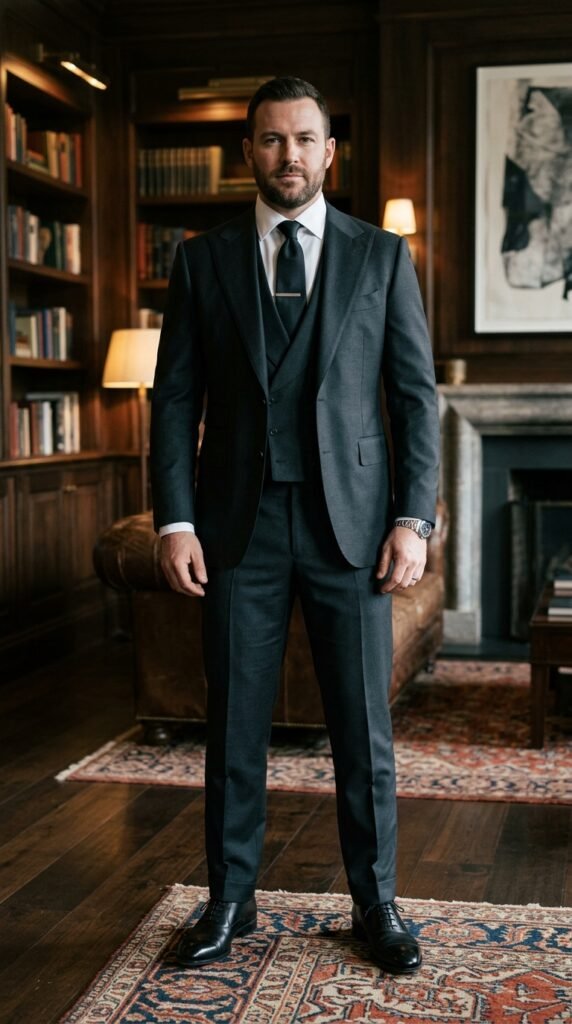
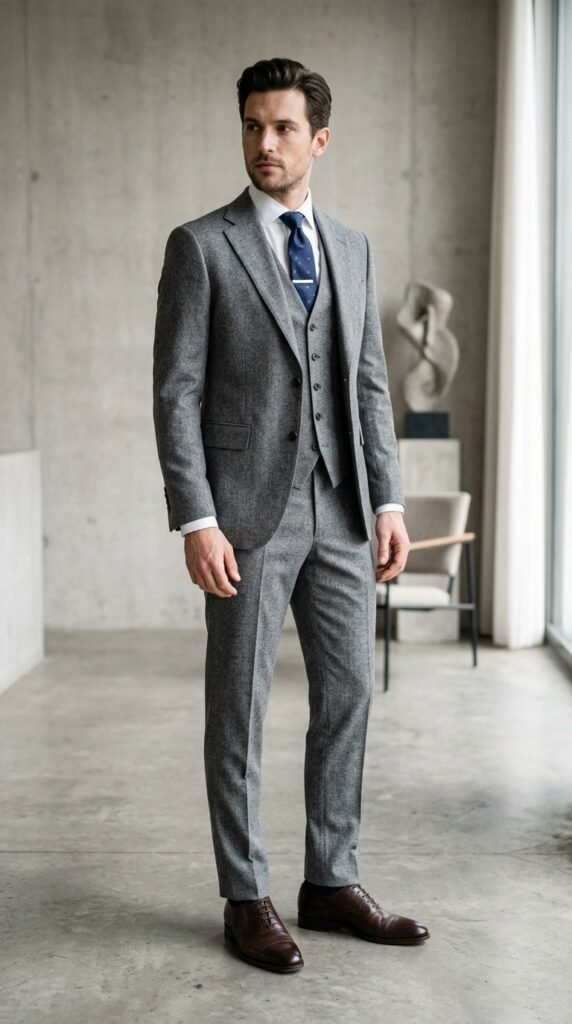
Knowing how to choose a 3 piece suit for your body type is the single most important skill in building a wardrobe that genuinely works. Not a wardrobe that looks acceptable. A wardrobe that commands attention, flatters your frame, and communicates confidence every time you get dressed.
Most men buy suits based on color, brand, or price. They overlook the factor that determines whether a suit elevates their appearance or undermines it entirely: the relationship between the garment’s construction and their unique physical proportions.
At Dressco Drapers, we specialize in luxury menswear and bespoke tailoring. We have fitted men across every body type—slim, athletic, broad, tall, and compact—and we have seen firsthand how the right construction choices transform a suit from something that merely fits into something that genuinely flatters.
This is not generic advice about “slim fits” and “regular fits.” This is a comprehensive, technically detailed guide covering fabric weights, waistcoat construction, lapel proportions, trouser specifications, and the 2026 innovations that are making the 3 piece suit more adaptable to every body type than ever before.
Your body is not a problem to be solved. It is a framework to be enhanced. The right 3 piece suit does exactly that.
Why Body Type Is the Foundation of Every Great 3 Piece Suit
A suit is an architectural garment. Like a building, it relies on proportion, structure, and balance. When those elements align with the body underneath, the result is visual harmony. When they do not, every flaw is amplified.
The Three-Piece Amplification Effect
Here is what most men do not realize: a 3 piece suit is more sensitive to body-type alignment than a two-piece. The waistcoat introduces a third fitted layer that sits directly against the torso—the area where body-type differences are most visible.
A two-piece suit can sometimes mask proportion issues through a well-cut jacket alone. A three-piece cannot. The waistcoat reveals torso length, midsection shape, and shoulder-to-waist ratio with precision. This means getting it right matters more—and the reward for getting it right is significantly greater.
The Psychological Impact of Correct Proportion
Research in social psychology demonstrates that perceived competence and attractiveness correlate strongly with visual proportion—specifically the shoulder-to-waist ratio and the perceived V-taper from chest to hip.
A 3 piece suit, correctly chosen for your body type, can enhance this ratio dramatically. The structured jacket broadens the shoulder line. The waistcoat defines and narrows the waist visually. The trousers elongate the leg. Together, these three elements create a silhouette that is universally read as authoritative and well-proportioned.
The key word is “correctly.” And that begins with understanding your body type.
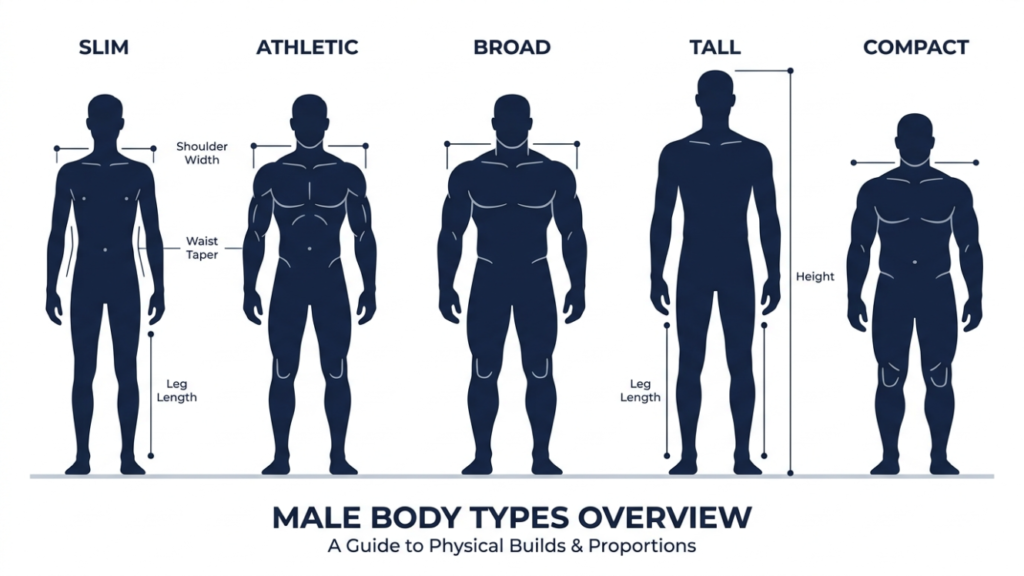
Understanding the 5 Male Body Types for Suit Selection
Before selecting fabric, color, or style, you must honestly assess your physical proportions. These five categories cover the vast majority of male frames.
1. Slim / Lean Build
Drop files to upload
Narrow shoulders and chest
Minimal midsection volume
Long limbs relative to torso
Hip width approximately equal to shoulder width
Primary challenge: Adding visual structure and presence without bulk.
2. Athletic / Muscular Build
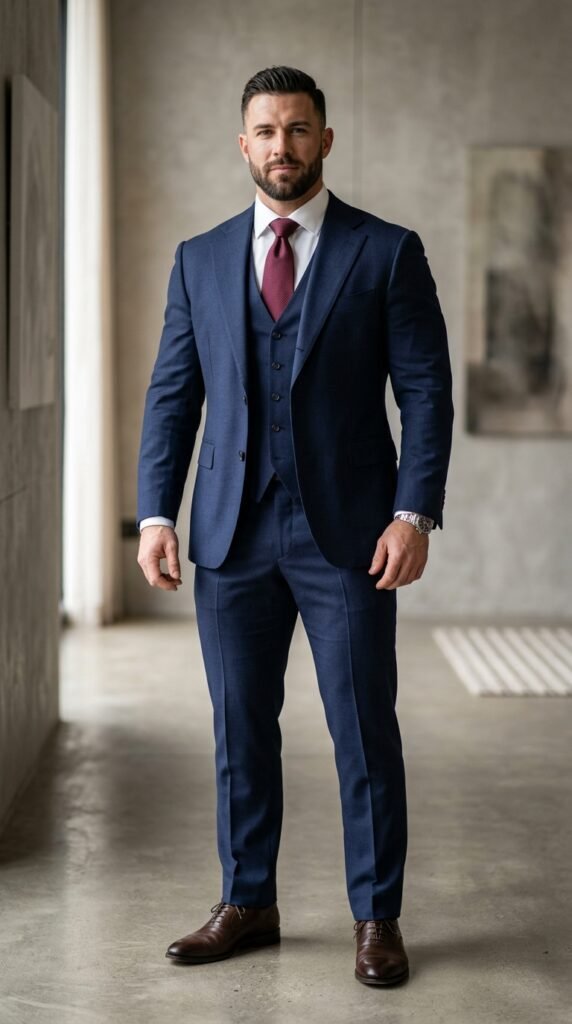
Broad shoulders and developed chest
Defined waist (natural V-taper)
Larger arms, especially upper arms and trapezius
Thighs often larger than standard trouser proportions accommodate
Primary challenge: Accommodating muscle mass without the suit looking tight, strained, or overly aggressive.
3. Broad / Stocky Build
Wide torso with substantial midsection
Shorter neck relative to shoulder width
Shoulders and hips approximately equal in width
Often shorter limbs relative to torso volume
Primary challenge: Creating vertical elongation and defining waist separation between chest and hip.
4. Tall / Long-Framed Build
Height above 185 cm (6’1″)
Longer torso and/or longer legs
Often narrower frame relative to height
Longer arms requiring extended sleeve lengths
Primary challenge: Filling the frame proportionally without the suit looking stretched or sparse.
5. Compact / Shorter Build
Height below 173 cm (5’8″)
Proportions often well-balanced but compressed
Shorter inseam and jacket length requirements
Risk of being overwhelmed by excess fabric
Primary challenge: Maximizing vertical lines and avoiding any element that shortens the visual frame.
How to Choose a 3 Piece Suit for Your Body Type: Complete Breakdown
This section provides specific, actionable recommendations for every body type across all three suit components—jacket, waistcoat, and trousers.
Slim / Lean Build: Adding Structure and Presence
Jacket specifications:
Shoulder construction: Light structured padding (5–8mm) to build out the shoulder line. Avoid unstructured or deconstructed jackets that follow the narrow frame too closely.
Lapel width:8–9 cm standard notch or peak lapels. Wider lapels add visual width to the chest.
Chest fit: Slight ease (3–4 cm beyond chest measurement) prevents the jacket from looking concave against a slim torso.
Jacket length: Standard length covering the full seat. Shorter jackets on slim frames emphasize narrowness.
Waistcoat specifications:
A 6-button single-breasted waistcoat with a higher button stance adds visual density to the torso.
The waistcoat should fit snugly but not skin-tight—a 1–2 cm ease at the chest prevents it from looking painted on.
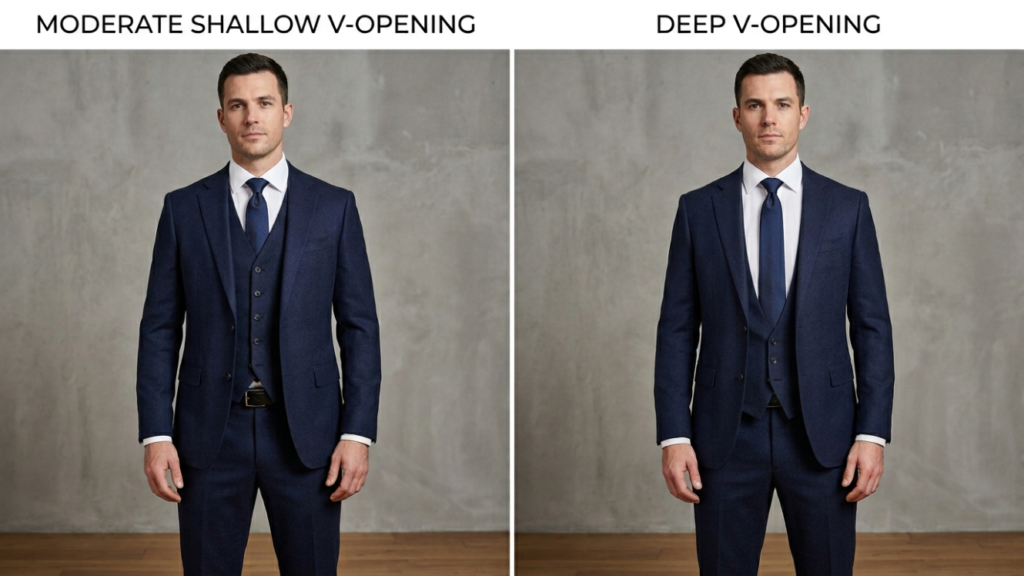
Avoid deep V-openings that expose too much shirt. A moderate V-opening adds mass to the chest area visually.
Trouser specifications:
Slim-straight cut rather than ultra-tapered. Extreme taper on lean legs emphasizes thinness.
Flat-front construction maintains a clean profile.
Medium rise sits at or just below the navel, pairing well with the waistcoat.
Leg opening: 17–18 cm provides enough visual weight at the ankle.
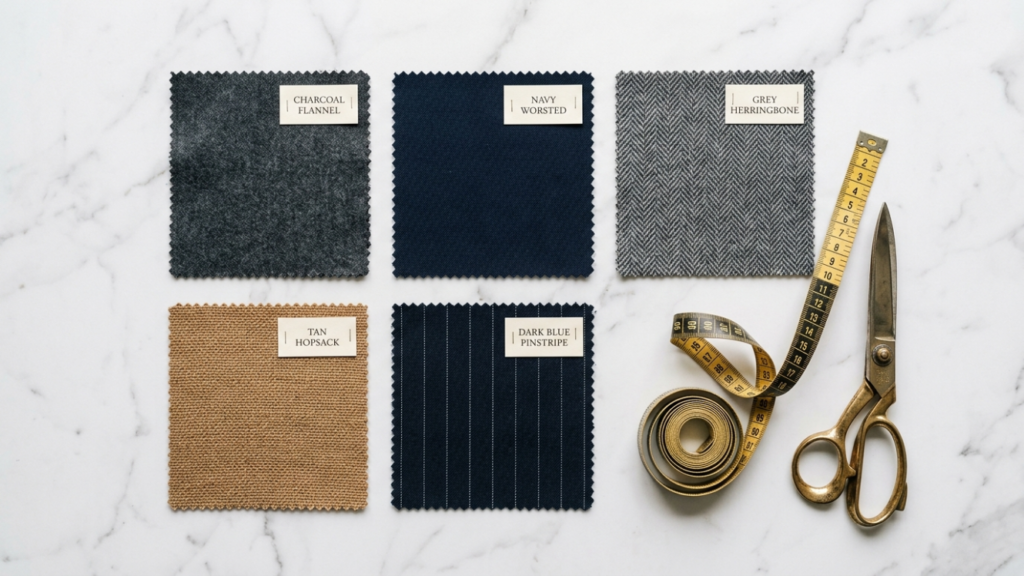
Fabric recommendation: Fabrics with texture and body—flannel (280–320 GSM), tweed, or hopsack weaves—add visual mass. Avoid ultra-smooth, lightweight fabrics that cling to the frame.
Browse our 3 piece suit collection for structured options that build presence for leaner frames.
Athletic / Muscular Build: Accommodating Power Without Strain
Jacket specifications:
Minimal shoulder padding (3–5mm or natural shoulder). Athletic frames already carry shoulder width—additional padding creates an aggressive, oversized look.
Higher armholes are critical. Low armholes restrict movement in muscular arms and pull the jacket body upward when you reach forward.
Chest ease of 5–7 cm beyond measurement prevents the dreaded X-shaped pull lines across the front closure.
Slightly longer jacket body (1–2 cm beyond standard) accommodates a larger chest without the hem riding up.
Waistcoat specifications:
Choose a waistcoat with a slightly deeper V-opening that showcases the shirt and tie rather than fighting against a broad chest.
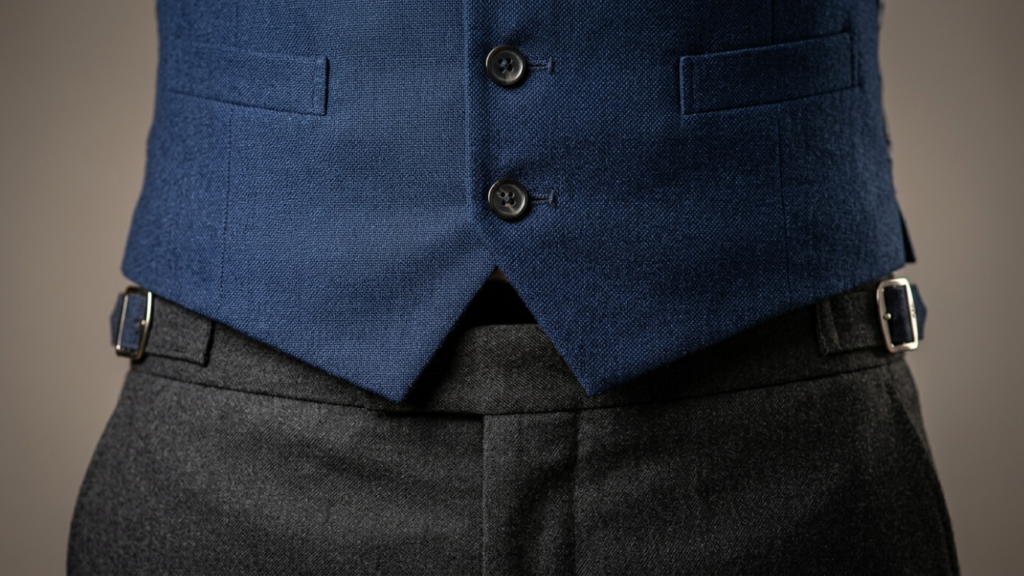
Adjustable back strap is essential—it allows you to cinch the waist while providing chest room, emphasizing the natural V-taper.
Avoid waistcoats that button too high on an athletic chest. The top button should sit 3–4 cm below the collarbone for comfortable closure.
Trouser specifications:
Fuller thigh allowance with taper from the knee down. Standard slim trousers will strain across developed quadriceps.
Medium rise is optimal—high rise bunches at the hip on muscular thighs; low rise creates an uncomfortable fit when sitting.
Leg opening: 17–18 cm maintains a modern silhouette while accommodating calf size.
Fabric recommendation:Fabrics with natural stretch—wool with 2–3% elastane, or high-twist wools that recover shape after movement. Weight range: 240–280 GSM for year-round comfort. Avoid stiff, rigid fabrics that restrict range of motion.
Broad / Stocky Build: Creating Vertical Flow and Waist Definition
Jacket specifications:
Structured shoulder with clean, defined edges (not rounded or heavily padded). A sharp shoulder line draws the eye outward and upward, away from the midsection.
Longer jacket length (covering the full seat and slightly beyond) creates a longer vertical line that elongates the torso.
Single-breasted, 2-button closure is the most flattering. Three-button jackets shorten the visual V-line. Double-breasted jackets add frontal volume.
Peak lapels draw the eye diagonally upward toward the shoulders. Notch lapels are acceptable, but peak lapels are the superior choice for broader builds.
Waistcoat specifications:
The waistcoat is your greatest ally on a broader frame. A well-fitted vest defines the waist in a way that a jacket alone cannot.
Choose a deep V-opening that creates a long, unbroken vertical line from neck to waist.
Dark, solid-colored waistcoats create a slimming central panel effect. Avoid horizontal patterns or bold contrast on the vest.
The bottom edge of the waistcoat must sit firmly over the trouser waistband with zero shirt visible. On broader builds, even a centimeter of shirt gap disrupts the vertical flow.
Trouser specifications:
Flat-front, straight-leg construction. Pleats add volume to the hip area that broader builds do not need.
Medium-to-higher rise prevents the waistband from sitting below the midsection, which accentuates the belly.
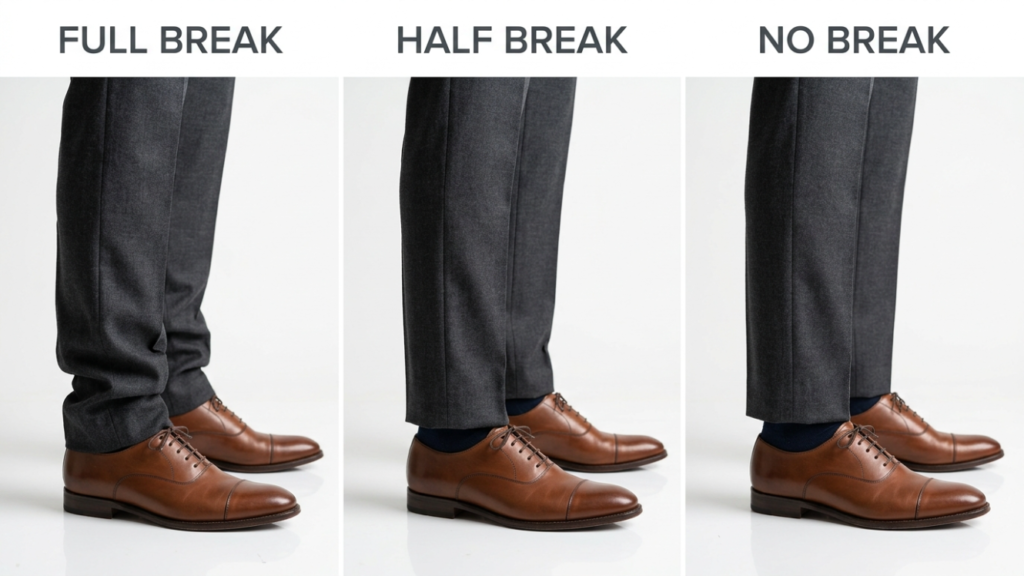
Clean, minimal break at the shoe. Excess fabric pooling at the ankle makes legs appear shorter.
Consider trousers with a side-adjustable waistband rather than a belt. Eliminating the belt removes a horizontal line at the widest point of the torso.
Fabric recommendation:Smooth, matte-finish worsted wools in 250–280 GSM create a clean surface without textural bulk. Avoid heavy flannels and textured tweeds that add visual volume. Super 110s–130s provide the clean drape that flatters broader frames best.
Tall / Long-Framed Build: Filling the Frame Proportionally
Jacket specifications:
Standard to slightly wider lapels (8.5–9.5 cm) fill the visual space of a longer torso and broader chest span.
Extended jacket length proportionate to height. A standard-length jacket on a tall frame looks cropped and unfinished.
Moderate shoulder padding to ensure the shoulder line reads as proportional to the longer frame.
Three-button closures work well on taller men—the additional button fills vertical space and creates structure.
Waistcoat specifications:
Extended waistcoat length is critical. Standard-length waistcoats on tall frames ride up, exposing shirt at the waistband—one of the most common and visible fit failures.
A 6-button waistcoat with moderate V-opening balances the longer torso without creating excessive vertical exposure.
The vest back panel must be long enough to remain tucked and smooth when seated.
Trouser specifications:
Adequate inseam length with a slight break at the shoe. Tall men often receive trousers that are too short—a critical error that undermines the entire silhouette.
Medium rise maintains proportional balance between torso and leg.
Moderate taper from knee to a 17–18 cm leg opening prevents the “stilt” effect of overly narrow trousers on long legs.
Fabric recommendation:Textured fabrics—herringbone, birdseye, subtle check patterns—add visual interest and density to a longer frame. Weight range: 260–320 GSM provides substantial body that fills the silhouette. Very lightweight fabrics on tall frames can appear insubstantial and deflated.
Shorter jacket length is the single most important adjustment. The jacket hem should end no lower than where your thumb knuckle falls when arms hang naturally. Every centimeter of excess length visually shortens the legs.
Narrow-to-medium lapels (7–8 cm) maintain scale with a smaller frame. Oversized lapels overwhelm compact proportions.
Minimal shoulder extension beyond the natural shoulder point. Extended shoulders on a shorter frame create a boxy, disproportionate appearance.
Two-button, single-breasted closure with the button positioned at or just above the natural waist. This creates the longest possible V-line from the collar to the closure point.
Waistcoat specifications:
A low-cut V-opening is essential. The longer the unbroken vertical line from collar to trouser waistband, the taller you appear.
5-button single-breasted design prevents the vest from appearing too dense on a compact torso.
The waistcoat must end precisely at the trouser waistband—not above, not below. Any excess fabric adds visual weight to the midsection.
Trouser specifications:
Higher rise elongates the leg line by raising the visual starting point of the leg.
No break or minimal break at the shoe. Excess trouser pooling at the ankle shortens the perceived leg length dramatically.
Moderate taper to a 16–17 cm leg opening creates a clean vertical line from hip to ankle.
Avoid cuffs/turn-ups on trousers. Cuffs create a horizontal line at the ankle that visually amputates length.
Fabric recommendation:Smooth, vertically oriented fabrics—pinstripes, fine herringbone, solid worsted wools in 240–270 GSM. Avoid large patterns, heavy textures, and horizontal designs that compress the visual frame. Vertical lines are your strongest ally.
Pair any of these body-type-optimized suits with a perfectly proportioned formal shirt to complete the foundation.
Fabric Weight and Construction by Body Type: Quick Reference
Body Type
Ideal Fabric
Weight (GSM)
Construction
Why It Works
Slim / Lean
Flannel, hopsack, textured wool
280–320
Structured, light padding
Adds visual mass and presence
Athletic / Muscular
High-twist wool, stretch wool
240–280
Natural shoulder, high armhole
Accommodates muscle, allows movement
Broad / Stocky
Smooth worsted wool, Super 120s
250–280
Defined shoulder, longer body
Clean drape, vertical elongation
Tall / Long
Herringbone, birdseye, checked wool
260–320
Extended proportions, 3-button option
Fills frame, adds density
Compact / Shorter
Solid worsted, pinstripe, fine weave
240–270
Shorter body, minimal padding
Maximizes vertical lines
7 Expert Rules for Choosing a 3 Piece Suit That Flatters Every Frame
Regardless of body type, these seven principles apply universally.
Rule 1: The Shoulder Is the Foundation
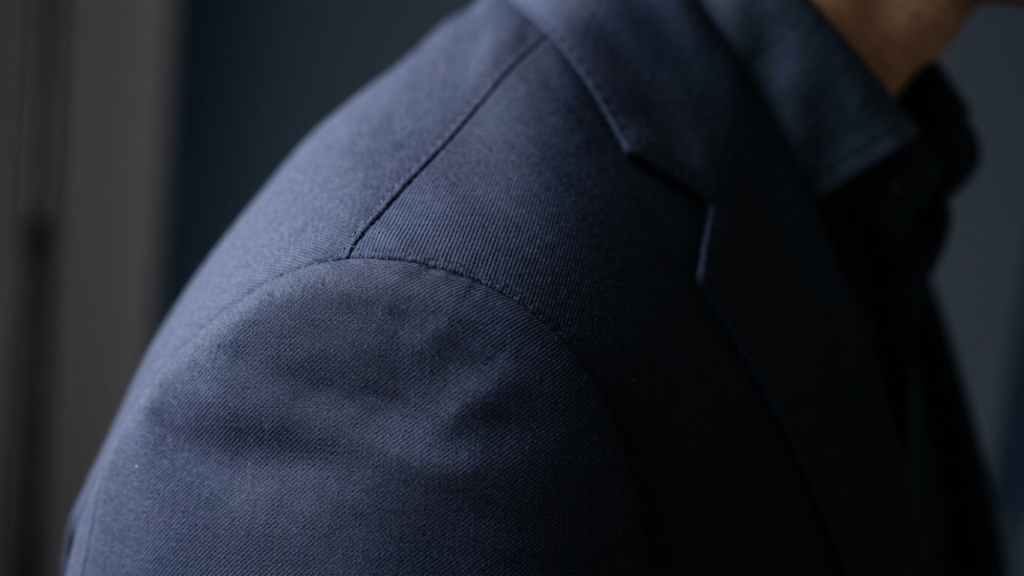
Every well-fitting suit starts at the shoulder. The seam must terminate at the shoulder bone—not before, not after. On a 3 piece suit, where the waistcoat draws attention to the torso, a misaligned shoulder creates a cascading series of fit failures that no other adjustment can correct.
Rule 2: The Waistcoat Must Earn Its Place
The waistcoat is not decorative. It is the defining element that separates a 3 piece suit from a two-piece. It must lie completely flat against the torso, buttons must close without horizontal strain lines, and the bottom edge must fully cover the trouser waistband with zero shirt visible.
If the waistcoat does not meet these three criteria, do not purchase the suit until it does—through sizing, tailoring, or a different cut entirely.
Rule 3: Armhole Height Dictates Comfort and Shape
Low armholes create excess fabric under the arm, restrict movement, and cause the jacket to lift when you raise your arms. Higher armholes (sitting 2–3 cm below the actual armpit) provide full range of motion and keep the jacket body in place.
This is especially critical for athletic and broader builds where arm movement tests the suit’s construction under stress.
Rule 4: Button Stance Controls Proportion
The placement of the jacket’s front button directly determines how much shirt and tie are visible—and therefore how long or short your torso appears.
Higher button stance (closer to the chest): Shortens the V-line, adds formality, suits taller frames.
Lower button stance (closer to the navel): Lengthens the V-line, adds visual height, ideal for compact frames.
Rule 5: Trouser Rise and Break Are Non-Negotiable Details
Trouser rise determines where the waistband sits relative to your natural waist—and this directly affects perceived leg length. Trouser break determines where the fabric meets the shoe—and excess break shortens the leg visually.
For maximum impact across all body types: Medium rise with minimal break is the modern standard.
Rule 6: Fabric Must Match Frame and Season
Heavy textures on slim frames add needed presence. Smooth surfaces on broader frames create clean, slimming lines. Vertical patterns on compact frames elongate. Textured weaves on tall frames add density.
Fabric is not just about comfort or aesthetics—it is a body-type tool.
Rule 7: Tailoring Is the Final 20% That Creates 80% of the Impact
No off-the-rack suit will perfectly fit any body type without adjustment. Budget for tailoring. Sleeve length, jacket body suppression, trouser hemming, and waistcoat cinching are minor investments that deliver disproportionate returns in fit quality.
At Dressco Drapers, our 3 piece suit collection is designed with tailoring-friendly construction that accommodates adjustments across every body type.
Waistcoat Fit Secrets: The Third Piece That Makes or Breaks Your Silhouette
The waistcoat deserves its own section because it is the element most men get wrong—and the element that defines the three-piece suit’s impact.
The Five-Point Waistcoat Fit Check
Perform this check before every wear:
Button closure: All buttons (except the bottom one, which stays undone) must close without horizontal pull lines. If buttons strain, the chest is too tight.
Torso contact: The vest should sit against the shirt across the entire front panel. Gaps between the waistcoat and shirt—especially at the sides—indicate the vest is too large.
Waistband coverage: The bottom edge must completely conceal the trouser waistband. Test this while standing AND while seated with arms raised.
Back panel: The back should lie flat with the adjustable strap providing a clean, wrinkle-free finish. Excess fabric bunching at the back means the vest is too wide.
Shoulder junction: The waistcoat’s armhole should sit inside the jacket’s armhole without visible overlap or misalignment at the shoulder.
Waistcoat V-Opening Depth by Body Type
Body Type
V-Opening Depth
Reason
Slim
Moderate (mid-chest)
Adds visual mass to chest area
Athletic
Slightly deeper
Accommodates broader chest comfortably
Broad
Deep (showing more tie)
Creates longest vertical slimming line
Tall
Moderate
Balances torso proportions
Compact
Deep (maximizes vertical line)
Elongates torso visually
Color and Pattern Selection by Body Type
Color and pattern are not just aesthetic preferences—they are proportion tools.
Colors That Flatter Each Frame
Slim builds: Medium grey, navy, earth tones (olive, taupe). These mid-range tones add visual weight without darkening the frame excessively.
Athletic builds: Navy, charcoal, slate blue. These classic tones frame muscle definition without competing with it.
Broad builds: Darker tones—charcoal, dark navy, midnight blue. Darker colors create a slimming, cohesive surface.
Tall builds: Medium grey, blue-grey, olive, warm tones. Mid-range and warm colors add approachability and density to a longer frame.
Compact builds: Solid dark tones create an unbroken vertical column. Avoid strong contrast between jacket and trouser colors, which visually segments the body into shorter sections.
Patterns by Body Type
Pinstripes: Elongate the frame. Excellent for compact and broader builds. Use with caution on very tall frames (can exaggerate height).
Windowpane checks: Add structure and visual interest. Best on taller and leaner builds that benefit from filled visual space.
Micro-patterns (birdseye, nailhead): Universal flattery. Add texture without directional distortion.
Bold checks and plaids: Best reserved for taller and athletic builds that carry the visual weight. Can overwhelm compact frames.
Solid fabrics: The safest universal choice. Solids create unbroken lines that suit every body type when cut correctly.
2026 Trends Making 3 Piece Suits More Body-Inclusive
The 2026 fashion season is actively addressing body diversity in tailoring. Here is what matters.
Expanded Size-Inclusive Patterns
Leading mills and tailoring houses are developing extended pattern blocks that accommodate athletic thighs, broader midsections, and longer torsos without compromising the slim, modern aesthetic. This means more men can access flattering slim-cut three-piece suits without extreme alterations.
Performance Stretch Fabrics
Natural stretch wools (wool with 2–3% elastane) are now standard in premium collections. For athletic and broader builds especially, these fabrics provide the ease of movement that rigid traditional wools cannot—without sacrificing drape or appearance.
Soft Shoulder Construction
The 2026 silhouette favors natural, lightly padded shoulders that follow the body’s actual shoulder line rather than imposing an artificial shape. This benefits slim and athletic builds that have historically been forced into one-size-fits-all shoulder padding.
Muted, Earth-Toned Palettes
The expanding palette—dusty sage, warm taupe, slate, muted terracotta, stone—offers more options for men whose body types are best served by mid-tone and warm colors rather than the traditional navy-charcoal-black spectrum.
Adjustable Waistcoat Engineering
2026 waistcoat designs increasingly feature multi-point back adjustment systems (double straps or slide buckles) that allow precise fit customization across the full torso—accommodating body types that fall between standard sizing without requiring a full bespoke commission.
Common Fit Mistakes by Body Type and How to Fix Them
Slim Builds
Mistake: Choosing ultra-slim fits that make the frame look even narrower.
Fix: Select a slim-straight cut with light structure. The goal is to add presence, not shrink-wrap the body.
Athletic Builds
Mistake: Sizing up the entire suit to accommodate the chest, leaving the waist and shoulders oversized.
Fix: Buy for the chest measurement and have the waist suppressed by a tailor. Or invest in made-to-measure.
Broad Builds
Mistake: Wearing a waistcoat that is too tight, creating horizontal strain lines across the midsection.
Fix: Size the waistcoat with 2–3 cm ease at the widest point. The vest should smooth the torso, not compress it.
Tall Builds
Mistake: Accepting standard jacket and waistcoat lengths that leave shirt visible at the waistband.
Fix: Always verify that the waistcoat covers the trouser waistband when seated. Request long-fit options or tailored extensions.
Compact Builds
Mistake: Wearing trouser cuffs and heavy trouser breaks that shorten the leg line.
Fix: Hem trousers to a clean, no-break or minimal-break length. Avoid cuffs entirely.
Buying Guide: Your Body-Type Checklist Before Purchase
Use this 10-point checklist before committing to any 3 piece suit purchase.
☐ Identify your body type honestly using the five categories above.
☐ Measure accurately: Chest, waist, hip, shoulder width, arm length, inseam, and torso length.
☐ Check shoulder alignment first—this is the hardest element to alter and the most important to get right.
☐ Test the waistcoat independently. Button it, sit down, raise your arms. Does shirt appear at the waistband? If yes, it fails.
☐ Assess jacket button stance. Does the V-line opening flatter your torso length, or does it need adjustment?
☐ Verify trouser rise and break. Medium rise, minimal break is the modern baseline—adjust from there based on body type.
☐ Evaluate fabric weight and texture. Does it add what your frame needs (presence for slim, smoothness for broad, density for tall)?
☐ Check armhole height. Raise your arms—does the jacket body lift significantly? If yes, armholes are too low.
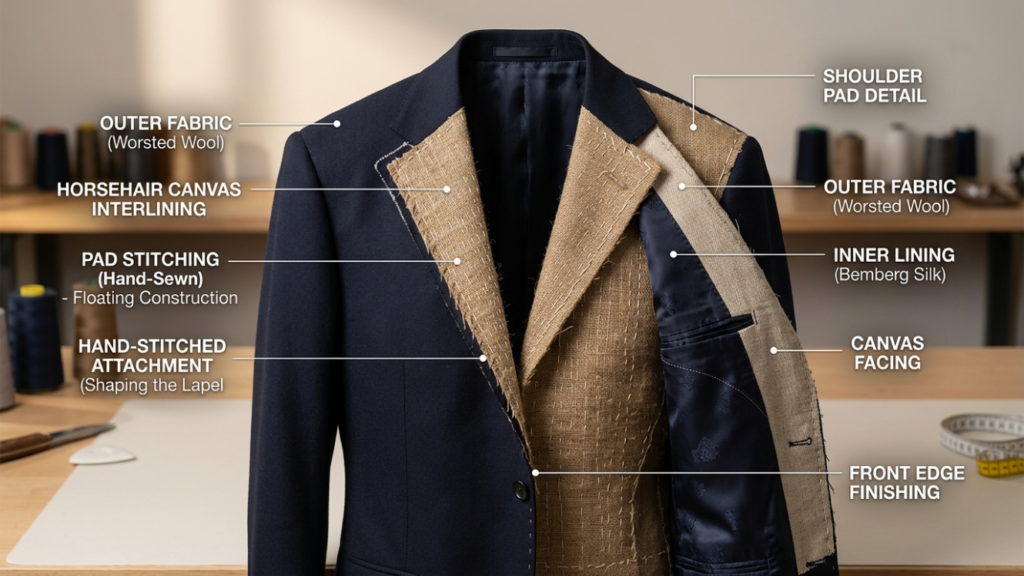
☐ Examine construction. Feel for canvas interlining in the chest. Check stitch quality (8–10 SPI on seams). Verify button security.
☐ Budget for tailoring. Factor in sleeve adjustment, trouser hemming, and waist suppression costs before purchase.
FAQs About Choosing a 3 Piece Suit for Your Body Type
Which body type benefits most from a 3 piece suit?
Every body type benefits, but broader and stocky builds often see the most dramatic improvement. The waistcoat creates waist definition that the jacket alone cannot achieve, producing a visually slimmer, more proportional torso. For slim builds, the three-piece adds structured presence. For compact builds, correct proportions in the waistcoat and trouser create significant elongation.
Should I choose slim fit or regular fit based on my body type?
Neither label matters as much as actual measurements. “Slim fit” from one brand may equal “regular fit” from another. Focus on specific ease measurements: 3–5 cm ease at the chest for lean builds, 5–7 cm for athletic and broader builds. The fit should follow your contours with enough room for comfortable movement—without excess fabric pooling anywhere.
Can a shorter man wear a 3 piece suit without looking overwhelmed?
Absolutely—with the right proportions. Keep the jacket short (ending at mid-hip), choose a deep V-opening waistcoat for maximum vertical line, opt for higher-rise trousers with zero break, and avoid cuffs. These adjustments collectively create 5–8 cm of perceived additional height through unbroken vertical flow.
How important is the waistcoat fit compared to the jacket?
Equally important—arguably more so. The waistcoat sits against your torso without the jacket’s structure to mask fit issues. A poorly fitted vest (too tight, too loose, too short, or gapping) is immediately visible and undermines the entire ensemble. Always test the waistcoat independently before purchasing.
What fabric weight should I choose for my body type?
Is bespoke necessary, or can off-the-rack work for my body type?
Off-the-rack works for men whose proportions closely match a brand’s standard pattern—and who budget for tailoring adjustments. For body types that deviate significantly from standard sizing (athletic builds with large chest-to-waist drops, compact frames requiring shortened proportions throughout, or tall builds needing extended lengths), made-to-measure or bespoke delivers dramatically better results. Dressco Drapers offers options across this spectrum.
Final Verdict: Your Body Type Deserves a 3 Piece Suit Built Around It
The question was never whether a 3 piece suit can flatter your body type. It absolutely can—every body type, without exception.
The real question is whether you will invest the knowledge, attention, and care required to choose a 3 piece suit for your body type with precision rather than guesswork.
Shoulder alignment. Waistcoat depth. Trouser rise. Fabric weight. Lapel proportion. Every technical detail covered in this guide exists to serve one purpose: making the suit work for your frame rather than against it.
In 2026, with expanded size-inclusive patterns, performance stretch fabrics, adjustable waistcoat construction, and a broader palette of colors and textures, the 3 piece suit has never been more adaptable to the full range of male body types.
Your body is not an obstacle. It is the blueprint. Build around it.
Explore the complete Dressco Drapers 3 piece suit collection and discover what happens when expert construction, premium fabric, and body-type-specific fit come together in a suit designed around you.